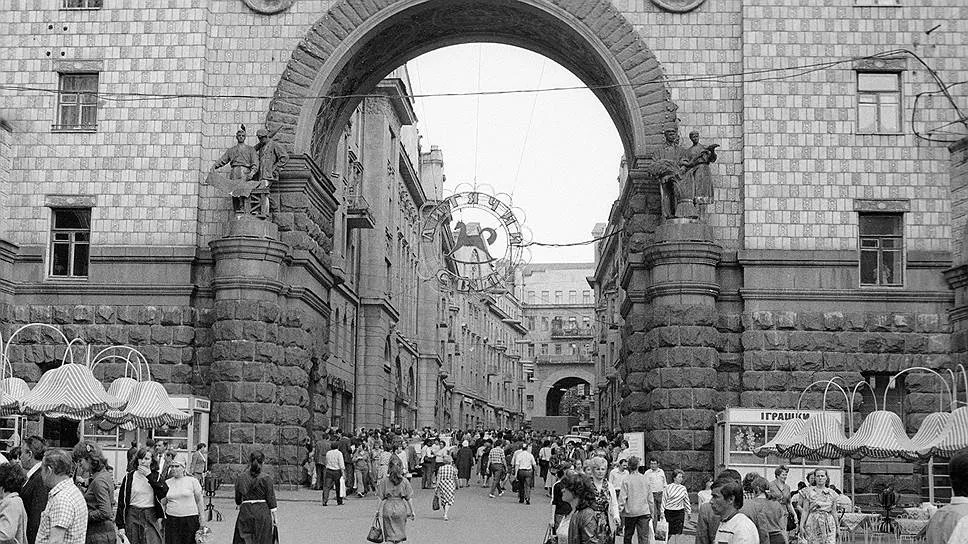
While catastrophe unfolded at the plant, people were put in mortal danger, and winds carried radiation hundreds of kilometers away, everything was fine in official Soviet reality and preparations for the May holidays continued.
scroll down
40 years have passed since the accident at the Chernobyl Nuclear Power Plant. It happened on April 26, 1986, and became the largest man-made disaster in human history. We recall how events unfolded then in the "facade" version of Soviet reality and in fact, and show the contrast clearly.
Reality
◆
Facade
Reality
The fourth unit of the Chernobyl Nuclear Power Plant is being prepared for shutdown from the grid for scheduled maintenance and testing. The goal is to check, if power at the plant suddenly fails, how long the turbine generator, still spinning by inertia during rundown, can provide enough electricity for the pumps that feed water into the reactor. The water cools it and absorbs neutrons, slowing the reaction. The test is meant to show whether that time is enough to bridge the gap before emergency diesel generators start. Similar tests had been carried out before, but without success: the rundown energy ran out too quickly.
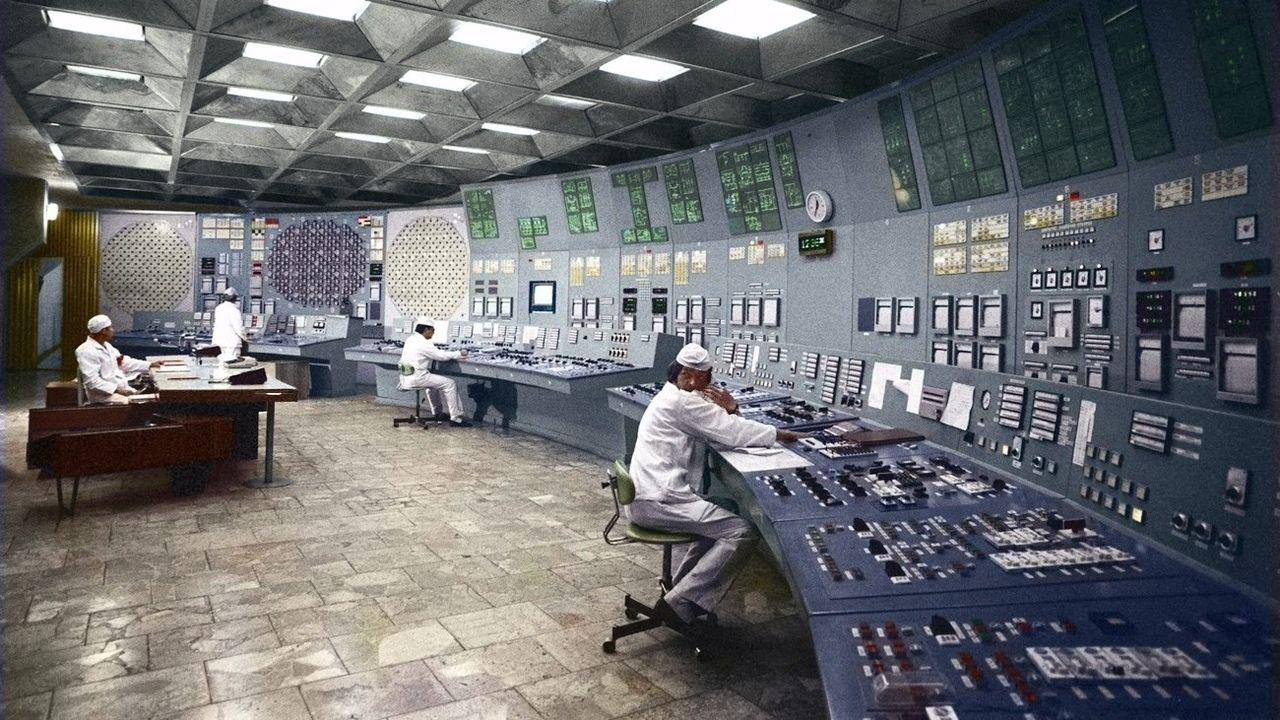
Control panel of Chernobyl NPP Unit 4, 1985 (colorized photo). Photo: convergedprod / reddit.com
Reactor power is gradually reduced for the start of the test. But during the day the process is paused after a call from Kyiv: there are problems at another Ukrainian power station, and Chernobyl has to keep supplying the grid to avoid destabilizing the power system. In the evening, the power reduction resumes.
During that time, because the reactor has been operating for a long period at half power, xenon, a decay product of iodine that interferes with the reaction, accumulates inside it. This is called xenon poisoning. It is impossible to climb out of a "xenon pit" quickly, and the power falls almost to zero. To keep the reactor from stalling completely, operators withdraw almost all the graphite control rods that restrain atomic fission. The test required at least 700 MW, but reaching that level would have taken a long time. The test supervisor, Chernobyl deputy chief engineer Anatoly Dyatlov, and the not very experienced shift supervisor Alexander Akimov decide to conduct the test at 200 MW.
April 25
Facade
A spring Friday. Pripyat, a brand-new Soviet atomic city, a promising and blooming town of almost 50,000 people, full of young people and children, is resting after the workweek and looking forward to the coming May holidays. On May 1, residents are supposed to receive a gift: an amusement park with a Ferris wheel is to open for them.
The designers of the Chernobyl reactor believed it was so safe that it could be placed on Red Square.
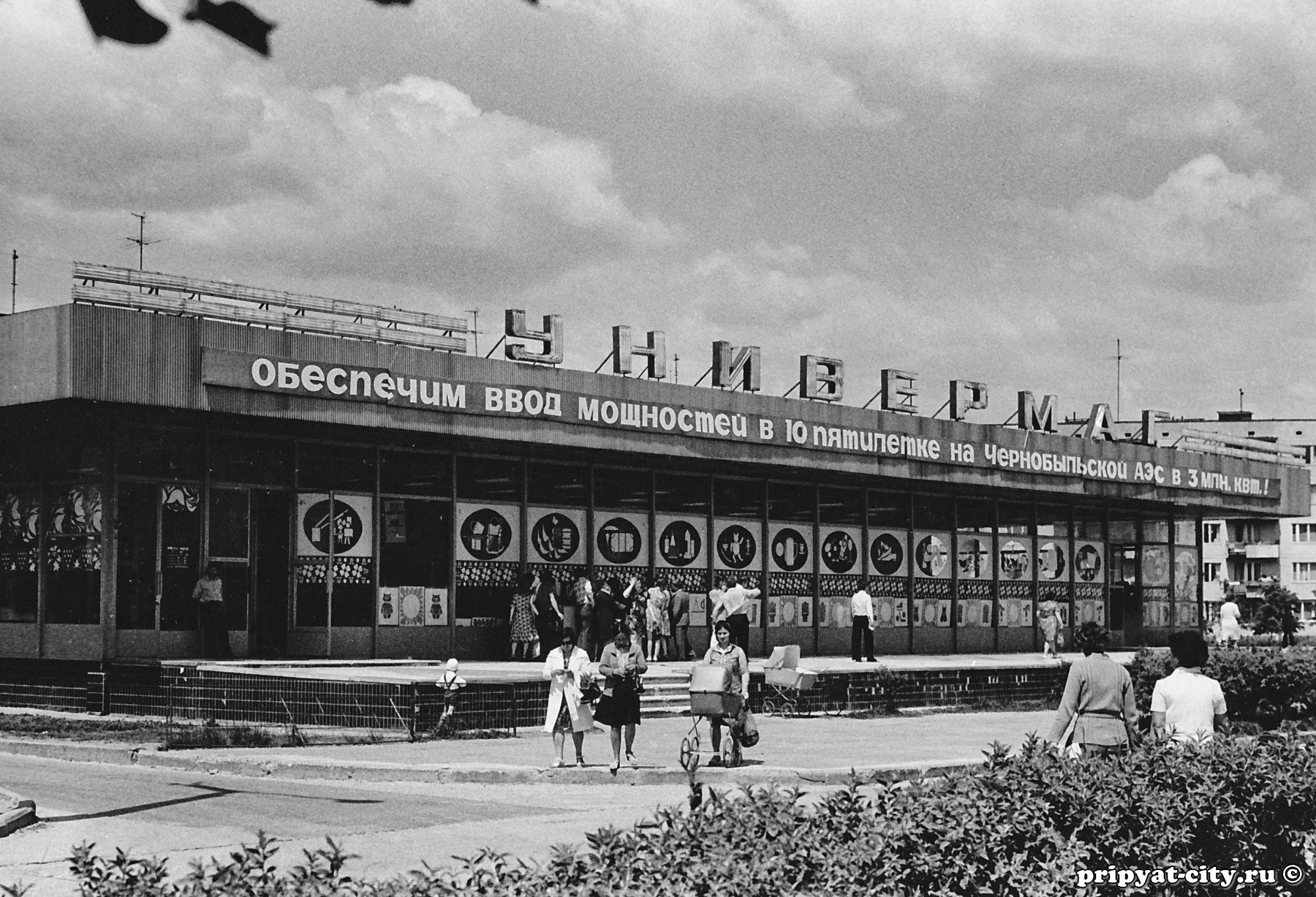
The city of Pripyat before the Chernobyl accident. The sign on the department store says: "We will ensure the commissioning of 3 million kW of capacity at the Chernobyl NPP in the 10th five-year plan!" Photo: pripyat-city.ru
Reality
01:23:04
The test begins. Operators disable automatic protections and partially close off steam. The pumps slow down, less and less water enters the reactor, and the water heats up and boils faster. Steam bubbles absorb neutrons much worse than water does, the chain reaction accelerates, and power starts to rise uncontrollably.
01:23:38
Seeing the sharp power increase, an operator hits the AZ-5 emergency shutdown button. Boron-carbide control rods, which are supposed to push water out of the channels, absorb excess neutrons, and slow the reactor, begin descending into the core. But a fatal flaw is built into the RBMK-1000 design: the rod tips are made of graphite, which absorbs neutrons even worse than water. When the rods start descending into the reactor, graphite replaces water in the first moments. Instead of braking, the reaction accelerates and power keeps growing for several seconds before the boron enters. This is called the "positive scram effect" or "end effect"; it had been discovered back in 1983 during startup of the Ignalina NPP, which had the same type of reactor. But the information was hidden, and the defect was not fixed.
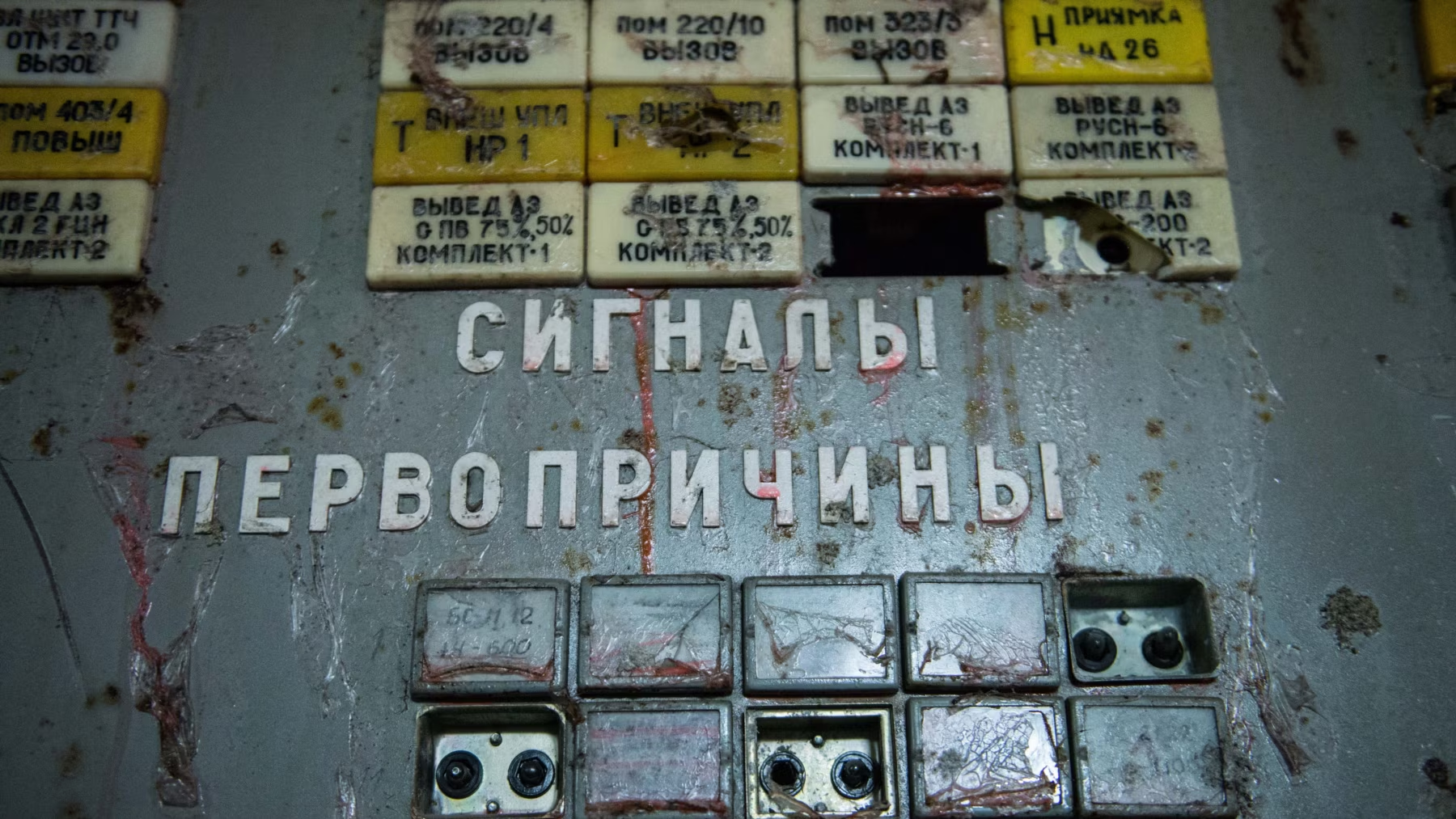
Control panel of Chernobyl Nuclear Power Plant Unit 4. Photo: RFE/RL
The Chernobyl staff do not know about the end effect and press AZ-5 believing that lowering the rods will shut everything down. Instead, in an instant there is a critical power spike, and the destabilized reactor enters a runaway state. Power exceeds all design limits. Steam pressure tears apart some structures: the first explosion. Water reacts with exposed nuclear fuel, graphite, and zirconium. Hydrogen and carbon monoxide form; their pressure lifts the reactor lid. Oxygen entering the core creates an explosive mixture.
01:23:46
The second explosion. The 1,000-ton reactor lid is thrown upward and falls back down. The walls and roof of the reactor hall are destroyed. Incandescent graphite and fragments of fuel rods thrown from the reactor start a fire on the roof. The remains of the core melt; a mixture of metal, concrete, and nuclear fuel fragments spreads through the spaces beneath the reactor.
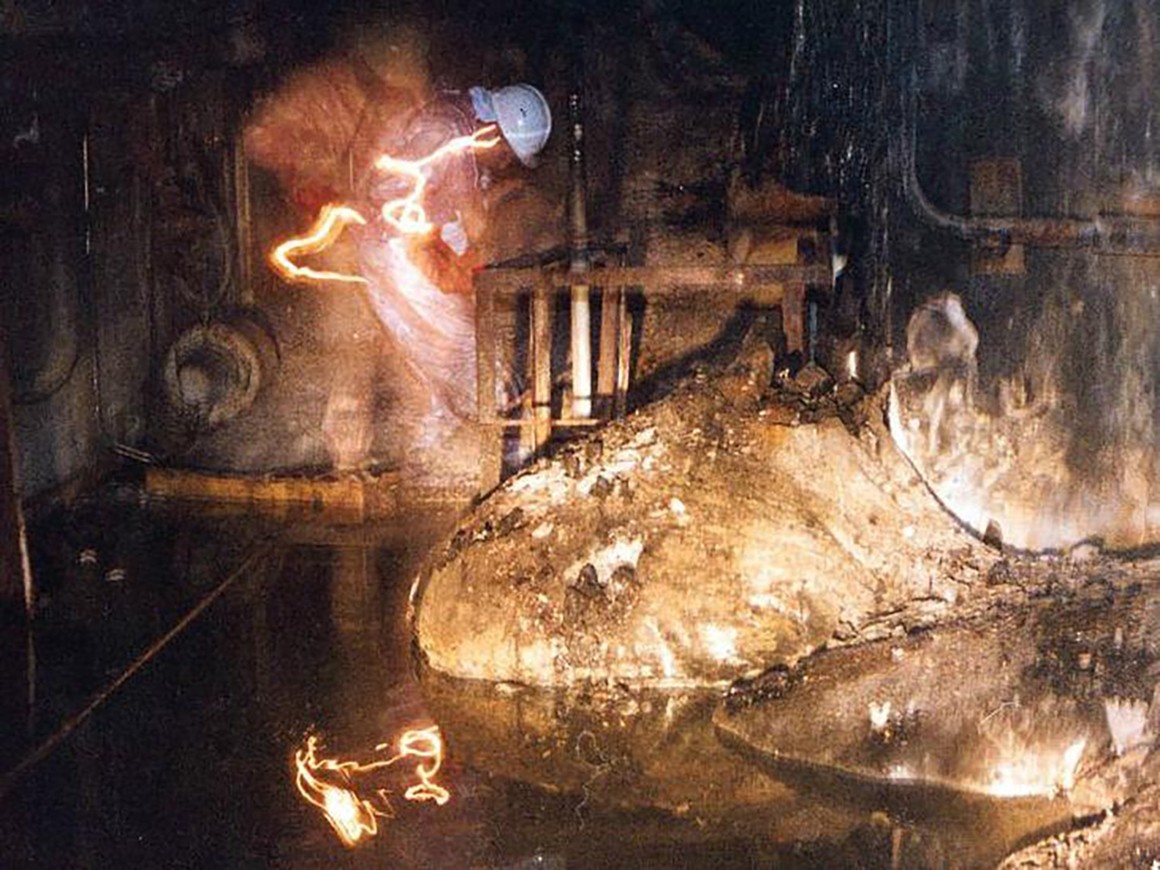
Artur Korneev, deputy director and head of the dosimetry service at the Shelter facility at Chernobyl, studies the "Elephant's Foot", a highly radioactive solidified mass of melted nuclear fuel, concrete, sand, and metal. Korneev worked at Chernobyl from 1987 and died in 2022. Photo: U.S. Department of Energy
The explosions kill senior reactor-shop operator Valery Khodemchuk; his body was never found. Worker Vladimir Shashenok, who was near the reactor, suffers a broken spine and burns. He will die in hospital by morning.
01:28
The first two fire crews arrive at the plant under the command of 23-year-old lieutenants Vladimir Pravik and Viktor Kibenok. Firefighters were told: the roof is burning. Standing above it, they put out burning bitumen that traps their boots and kick chunks of graphite down into the darkness. Their only protection is canvas suits, mittens, and helmets. Those who worked in gas masks took them off in the first minutes: it was too hot. The young men do not know that beneath them is an open reactor.
Plant workers also still do not understand that the reactor has been destroyed, and for half the night they will try to pump cooling water into it. Eight workers will be hospitalized with burns. It will become clear only by 3:30 that radiation levels are off the scale. The only dosimeter found with a large range up to 1,000 roentgen per hour maxes out and breaks.
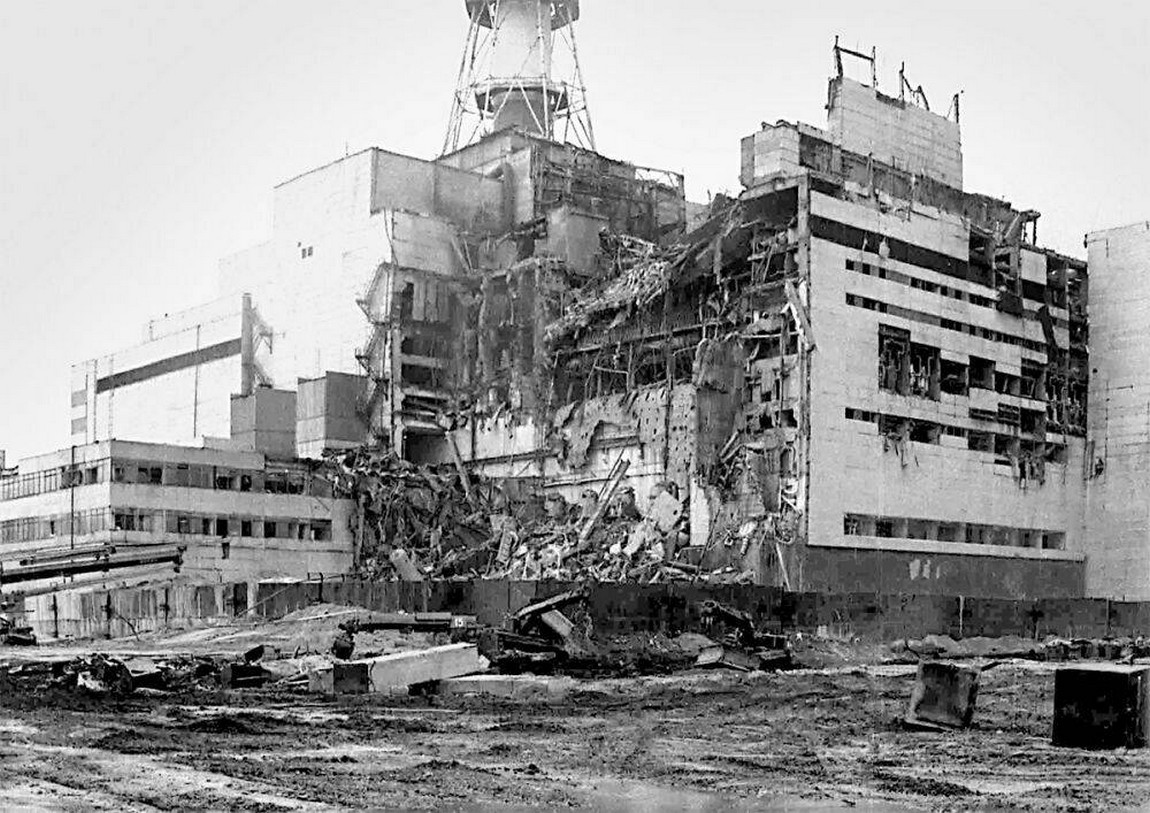
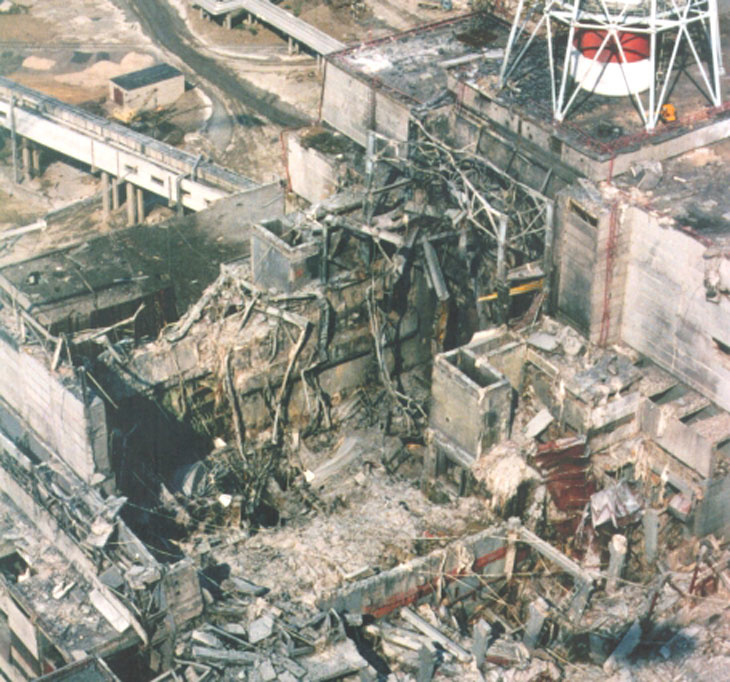
Destroyed fourth unit after the fire was extinguished, April 1986. Photo: vdpo.rf
Night of April 26
Facade
Pripyat keeps sleeping while radioactive smoke rises from the reactor and is carried by the wind to the north-northwest, toward Belarus. There are no reports about an accident.
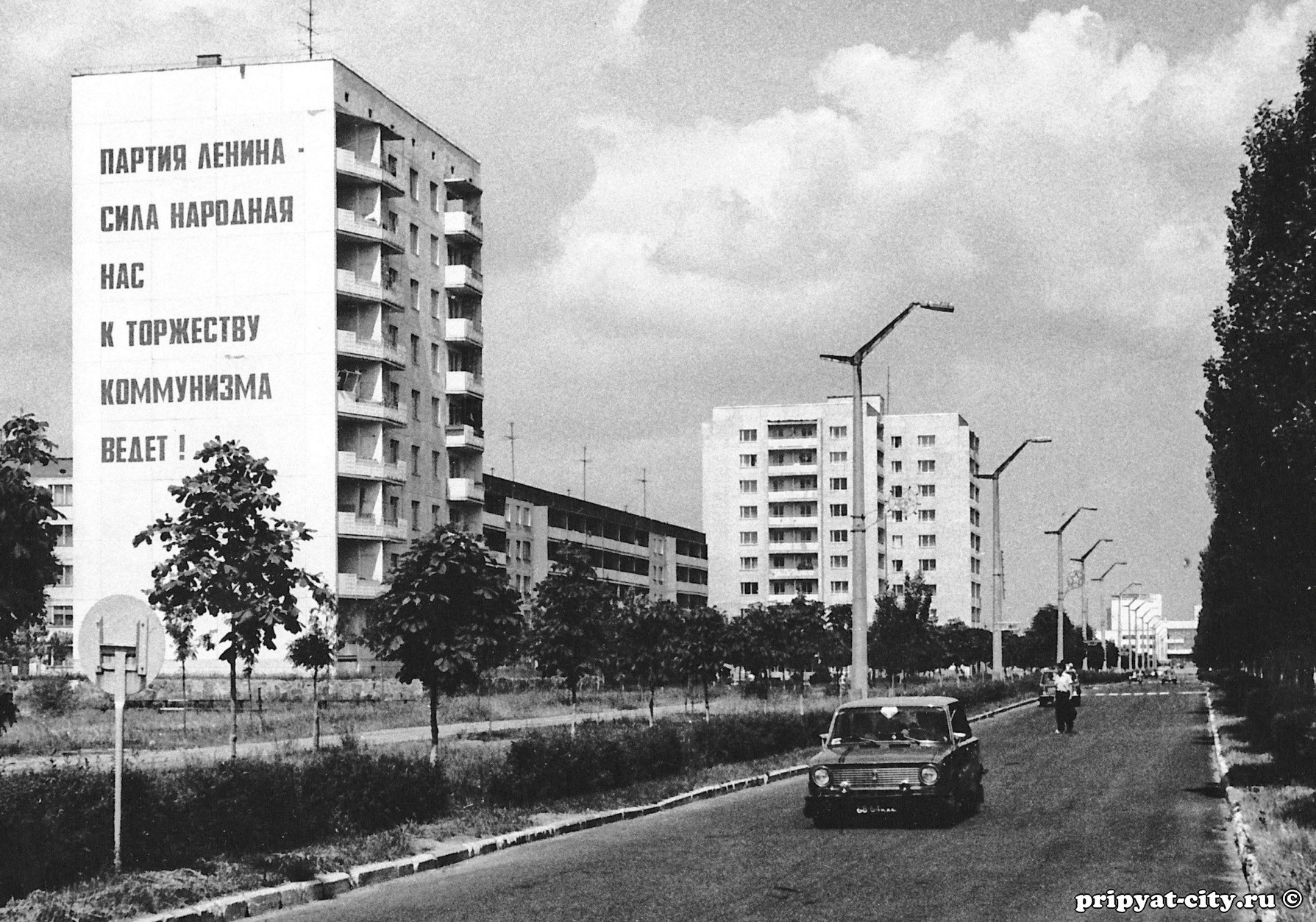
The city of Pripyat before the Chernobyl accident. The sign on the apartment block says: "Lenin's Party, the people's force, leads us to the triumph of communism!" Photo: pripyat-city.ru
Reality
At five in the morning, General Secretary Mikhail Gorbachev receives a call about the accident. According to him, he was told the reactor was intact. By six in the morning, the roof fire has been extinguished. Firefighters prevent it from spreading to the third unit and avert an even greater disaster at the cost of their own lives. Their symptoms had begun as early as two in the morning: vomiting, weakness, and darkening skin under their gloves, a "nuclear tan". Twenty-five-year-old Belarusian Vasily Ignatenko from the Bragin district carries an unconscious comrade down from the roof on his own back. He himself receives a dose of 1,600 roentgen, with 400 considered lethal.
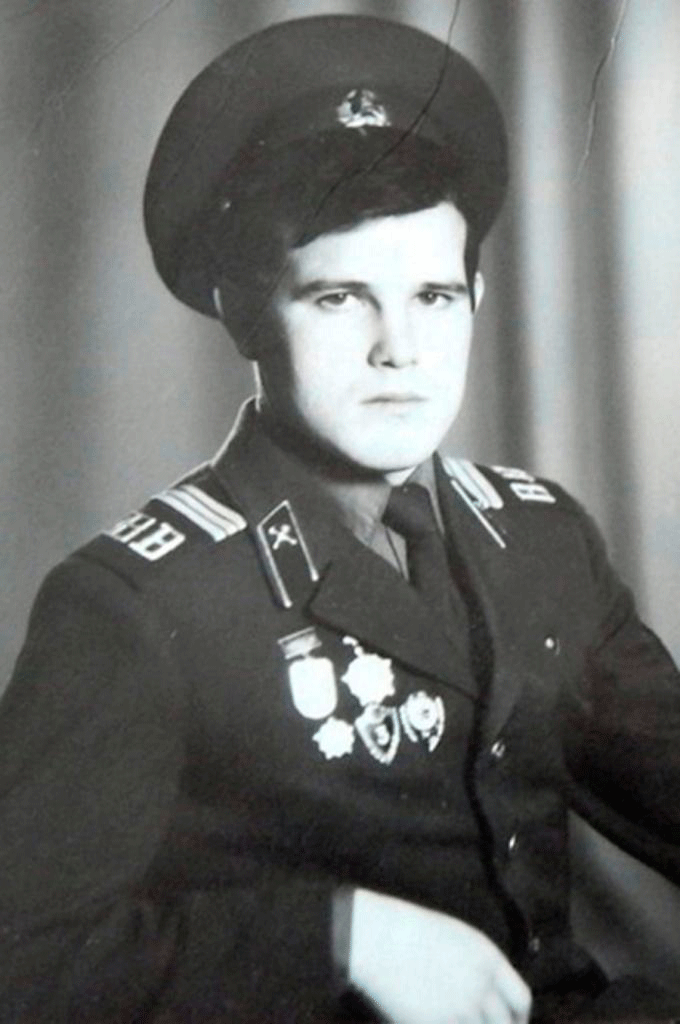
Vasily Ignatenko. Photo: commons.wikimedia.org
In the morning, 43 injured people are sent to the local hospital. Their clothing is emitting extreme levels of radiation, and it is dumped in the basement. Doctors have no experience treating radiation sickness. Pravik, Kibenok, Ignatenko, their comrades, and injured plant workers are flown to Moscow that evening, to Hospital No. 6, which handles radiological incidents.
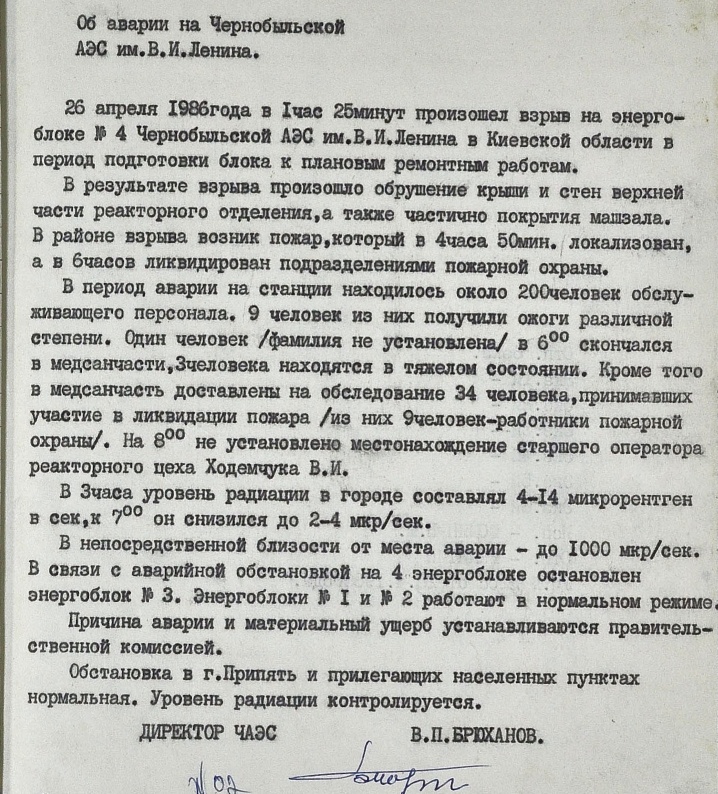
In the morning, plant director Viktor Bryukhanov sends Moscow a brief report: he writes that an accident has occurred, but seriously understates its scale and does not report the reactor's destruction: "The fire has been extinguished, the situation in the city is normal, and the radiation level is under control."
Report by plant director Bryukhanov to Moscow, April 26, 1986. Source: avr.org.ua
During the day, officials from Kyiv and Moscow start flying into Pripyat. By evening, the reactor has been surveyed by helicopter, and it becomes clear that it has been destroyed. Nuclear fuel is burning inside it, and there is a major risk that the chain reaction will soon restart by itself and become impossible to stop. Radiation levels in the city during the day are about ten times higher than natural background, still within tolerable limits. But they are rising rapidly.
Some specialists insist on evacuating Pripyat, but the commission head Boris Shcherbina, deputy chairman of the USSR government, and others do not want to "spread panic". Academician Valery Legasov tries to figure out how to extinguish a reactor that is dangerous even to approach. No one understands what to do, and many do not believe how bad things really are. In the evening, deep inside the reactor, there are flashes and rumbling, and a new radiation release occurs. After this, the authorities finally decide to begin preparing to evacuate the city.
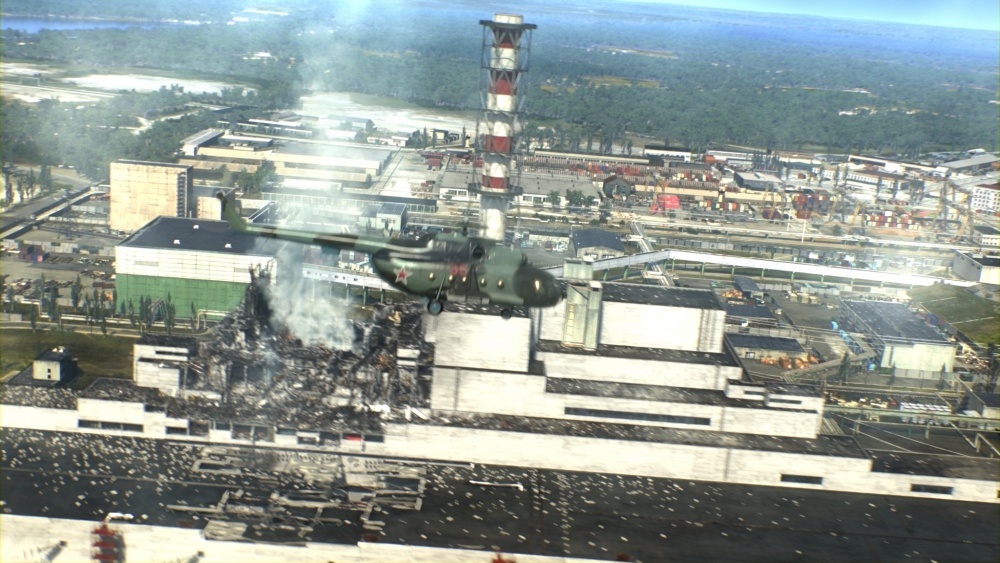
A helicopter flies near the destroyed Chernobyl power unit. Cleanup of the Chernobyl accident. Photo: 23.mchs.gov.ru
Day of April 26
Facade
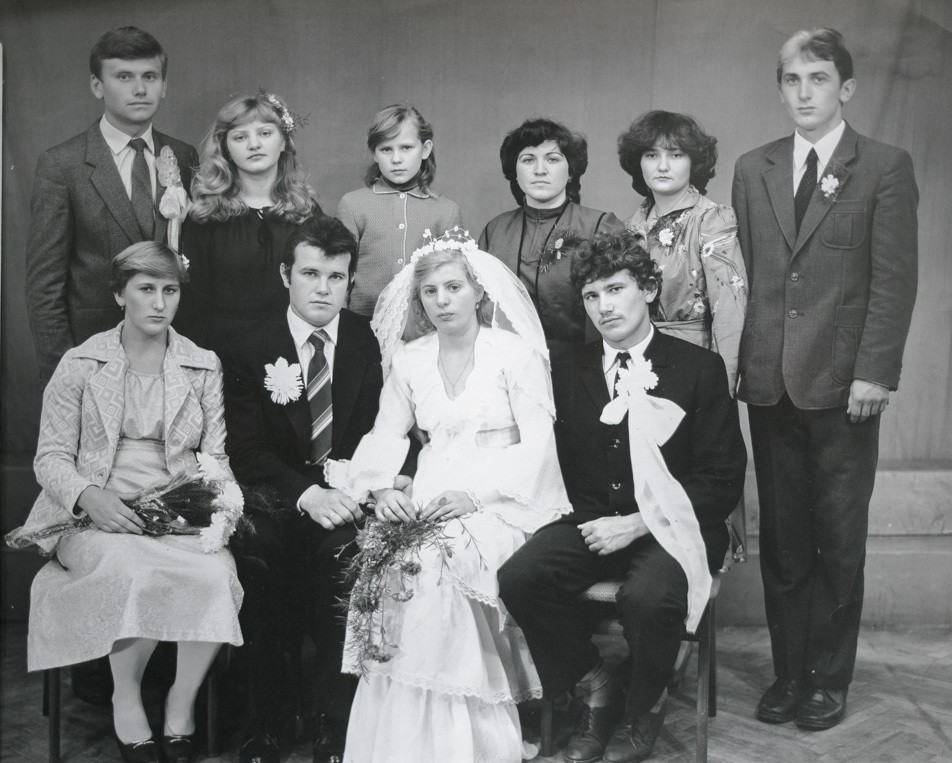
In Pripyat, it is an ordinary weekend day with excellent warm weather. People walk around the city, children play soccer, and laundry dries on balconies. Residents celebrate 16 weddings. The accident is not announced, and there are no recommendations to stay indoors.
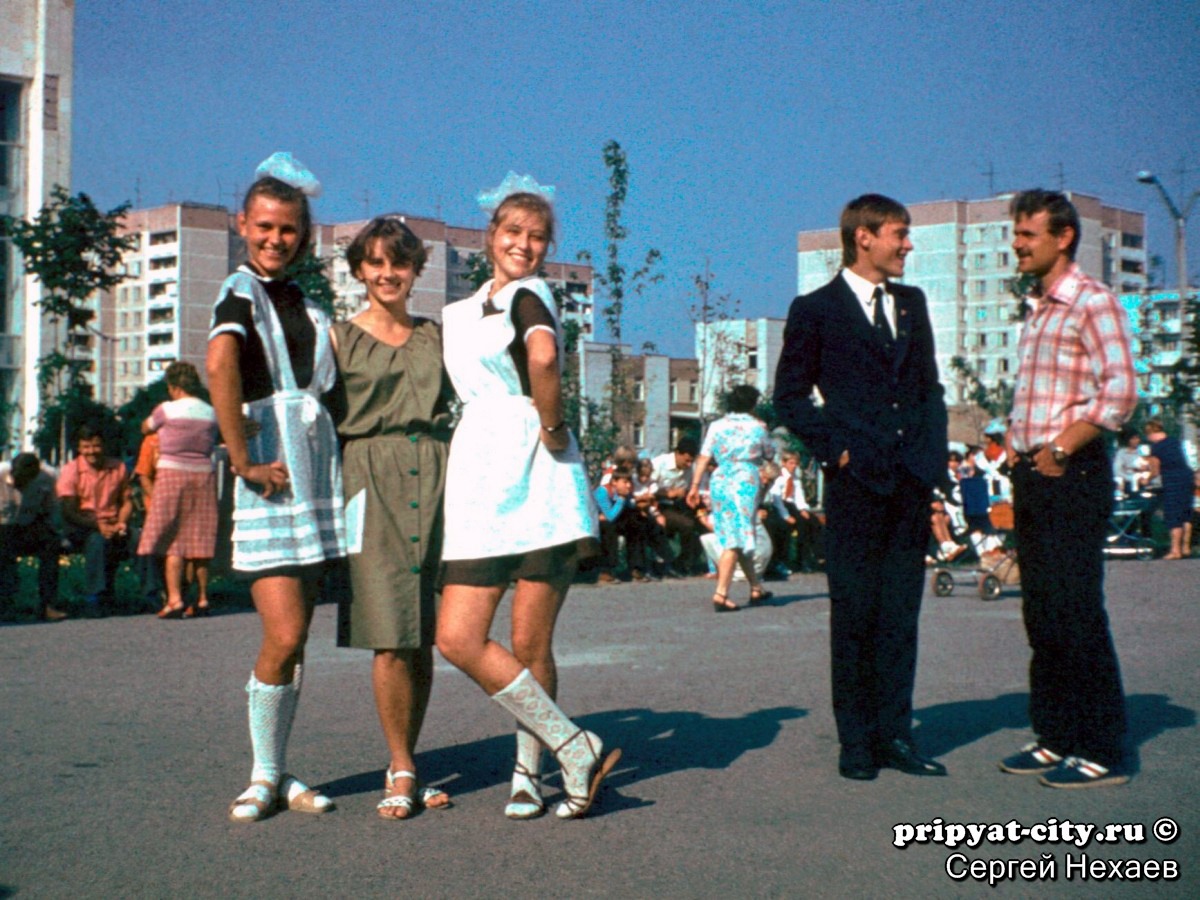
Graduation celebration in Pripyat before the Chernobyl accident. Photo: pripyat-city.ru
Reality
In the morning, near Kyiv, authorities stop a car belonging to a Pripyat resident carrying passengers. According to the driver, they left the city at six in the morning to rest in the forest. The radiation level on the car's surface is 5,000 times above background. The people and the car are sent for decontamination.
Thirty-six hours after the disaster, at 13:10 on Sunday, the first official announcement of the accident at the nuclear plant finally sounds on Pripyat city radio. The announcer orders residents to gather for a "temporary evacuation". To avoid frightening them, people are told it will last only three days. Taking belongings and pets is forbidden. The degree of danger and radiation levels are not explained.
Between 14:00 and 18:00, 44,460 people are taken out. About 5,000 workers remain for accident cleanup, along with police and military personnel.
"After the evacuation, the full government commission stayed overnight and had dinner in the Pripyat hotel Polesie, in ordinary clothes and without respirators. And the water, the air, and all the food were already contaminated. Our academicians also flew over the territory by helicopter in the first days after the disaster in ordinary clothes and without respirators. So those who informed me did not fully understand themselves what had actually happened," Mikhail Gorbachev would later say.
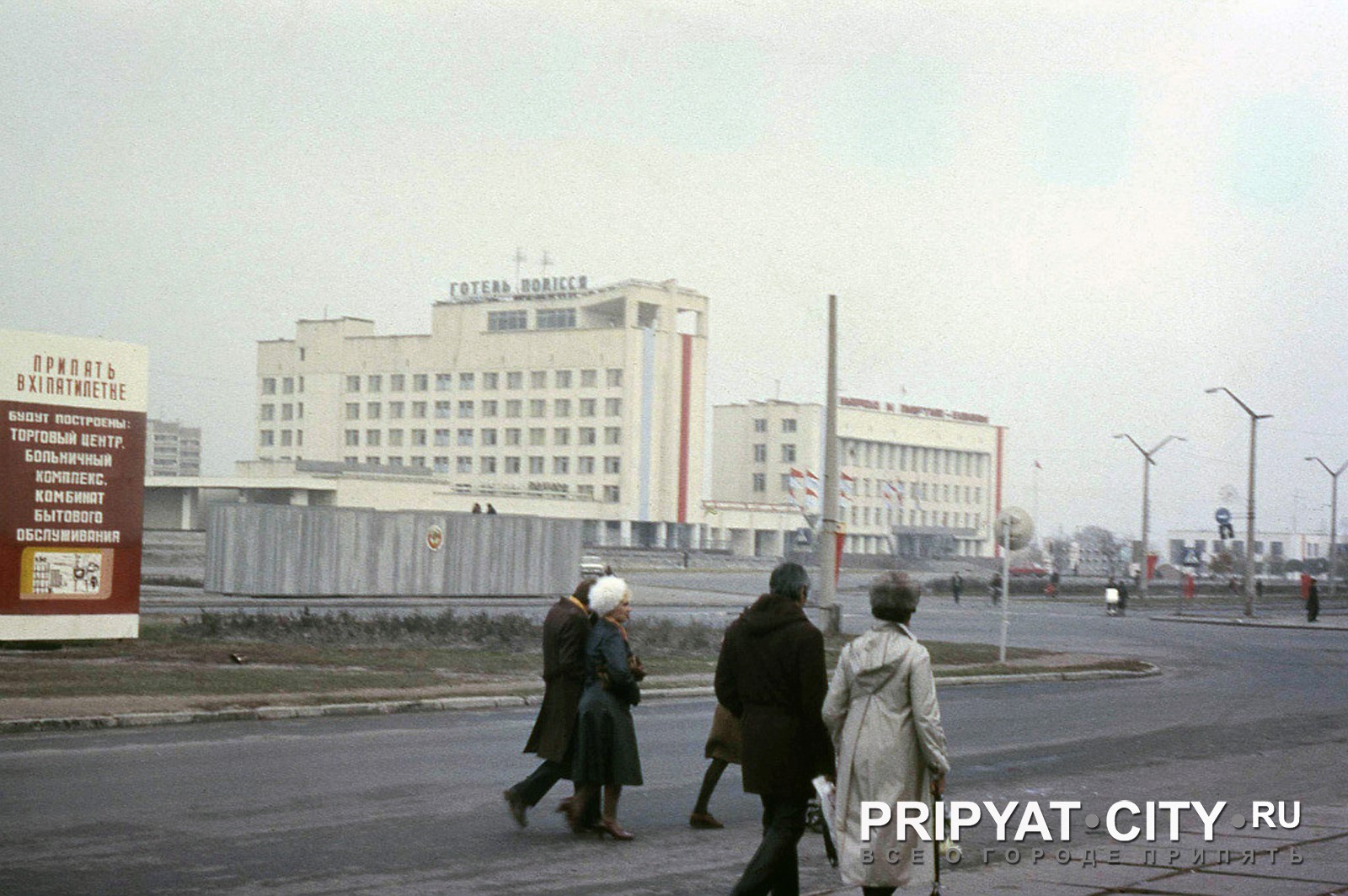
People walk through Pripyat with the Polesie hotel and city executive committee in the background, before the Chernobyl accident. The sign reads: "Pripyat in the 11th five-year plan. To be built: a shopping center, a hospital complex, and a consumer-services complex." Photo: pripyat-city.ru
At ten in the evening, a nuclear power plant in Sweden, more than a thousand kilometers from Pripyat, detects a sharp rise in radiation and starts searching for the cause. At first, specialists suspect one of their own facilities, but soon they become convinced that it is not the source.
April 27
Facade
Central Soviet media are silent about the accident. Since Sunday morning, police have cut off the entire plant area with checkpoints, and the KGB disconnects long-distance telephone lines in Pripyat to prevent rumors from spreading.
Residents of Belarus, which has already been covered by radiation, do not suspect it and enjoy a sunny Sunday.
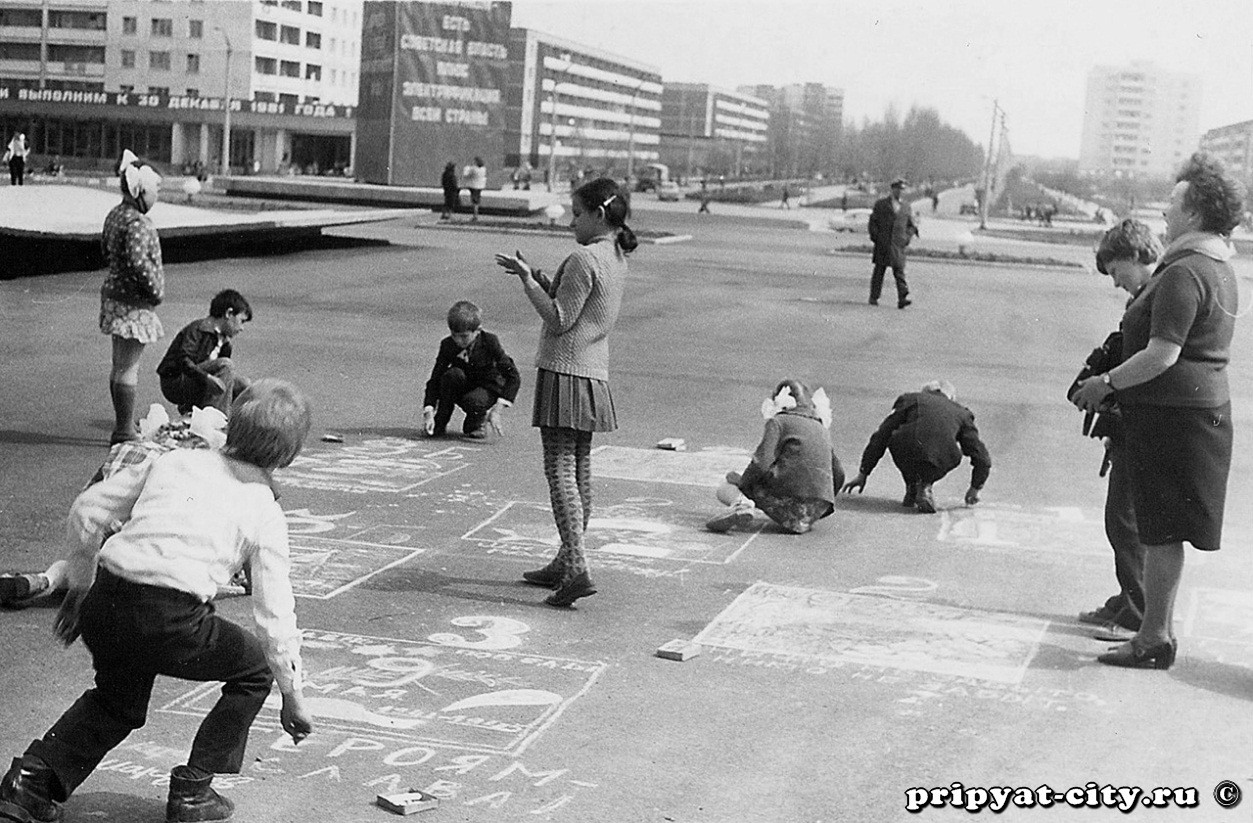
Children play hopscotch in the city of Pripyat before the Chernobyl accident. Photo: pripyat-city.ru
Reality
On Monday afternoon, Swedish authorities determine that the radiation reached them from somewhere east of Finland. The Associated Press publishes a report about it, and a source in the Swedish government hints that the USSR is involved. In the evening, Sweden's energy minister confirms at an emergency press conference that the violating state lies to the east.
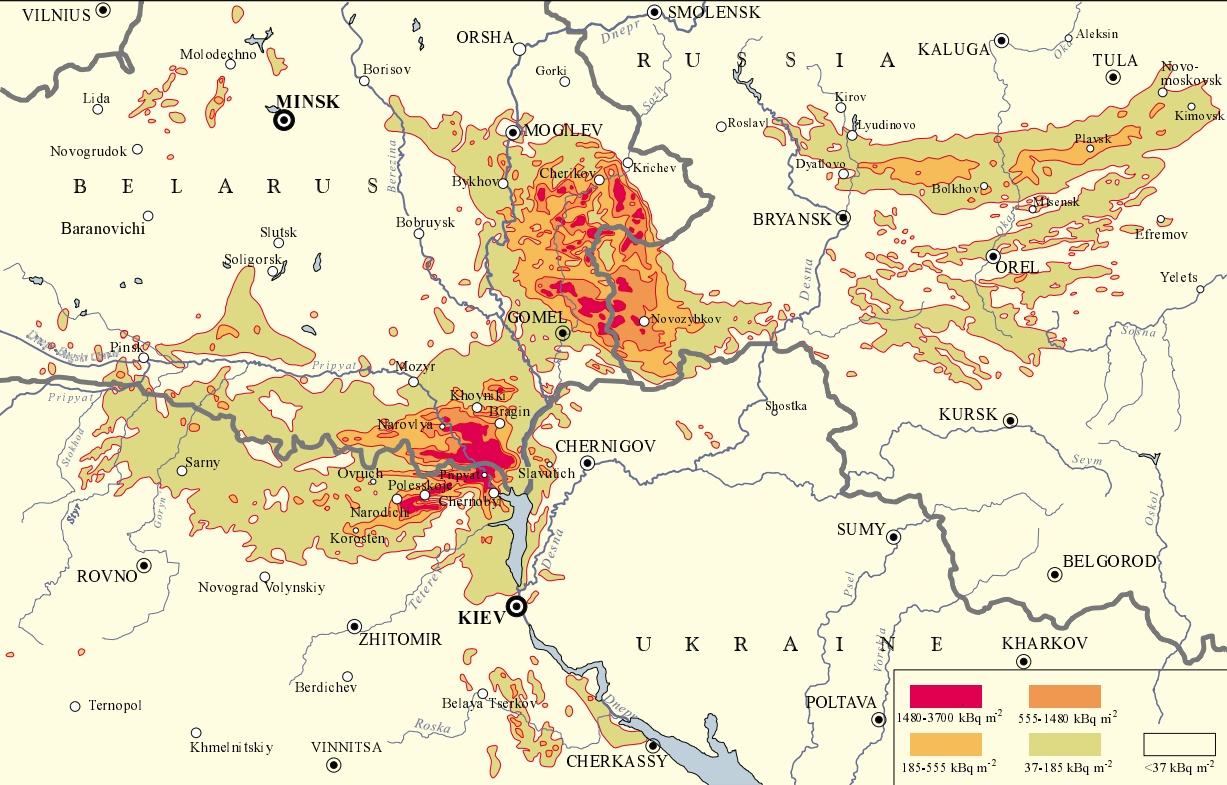
Cesium-137 contamination after the Chernobyl accident, 2000. Photo: UNSCEAR
April 28
Facade
At 21:00 Moscow time, the anchor of the television program Vremya reads a short government statement:
"An accident has occurred at the Chernobyl Nuclear Power Plant. One of the nuclear reactors has been damaged. Measures are being taken to eliminate the consequences of the accident. Assistance is being provided to those affected. A government commission has been created."
This is the first official information about the disaster. Almost 80 hours have passed since the accident.
Reality
Helicopter flights over the destroyed reactor do not stop. Pilots hover above the reactor for only seconds and drop a mixture of sand, lead, and boron into the smoking crater: lead absorbs gamma radiation, and boron stops the chain reaction. This was Academician Legasov's idea. From April 27 to May 1, 5,000 tons of the mixture are dropped into the reactor.
Instruments used to measure the radiation received max out at 500 roentgen per hour and fail. In the first days, pilots have no personal radiation detectors, and even later the doses they received were recorded as many times lower than they really were; otherwise new pilots would have been needed every day.
Destroyed fourth unit of the Chernobyl NPP. Photo: 23.mchs.gov.ru
The wind turns south and now carries radioactive clouds toward Ukraine's capital. Anxiety grows in Kyiv. Rumors about the explosion spread through the city together with evacuees arriving from Pripyat. People buy up iodine in pharmacies. There are no official recommendations.
In Belarus, on April 30, the Gomel regional council of deputies issues a decision for the Bragin, Khoiniki, and Narovlya districts, which are closest to the plant and have received the heaviest contamination. Local authorities are ordered to constantly monitor the radiation situation, distribute potassium iodide solution to residents, stop field work on collective farms, and ban bread baking. People must keep children indoors, stop drinking well water, drive livestock into barns, and send milk for processing. But people are not told what is happening.
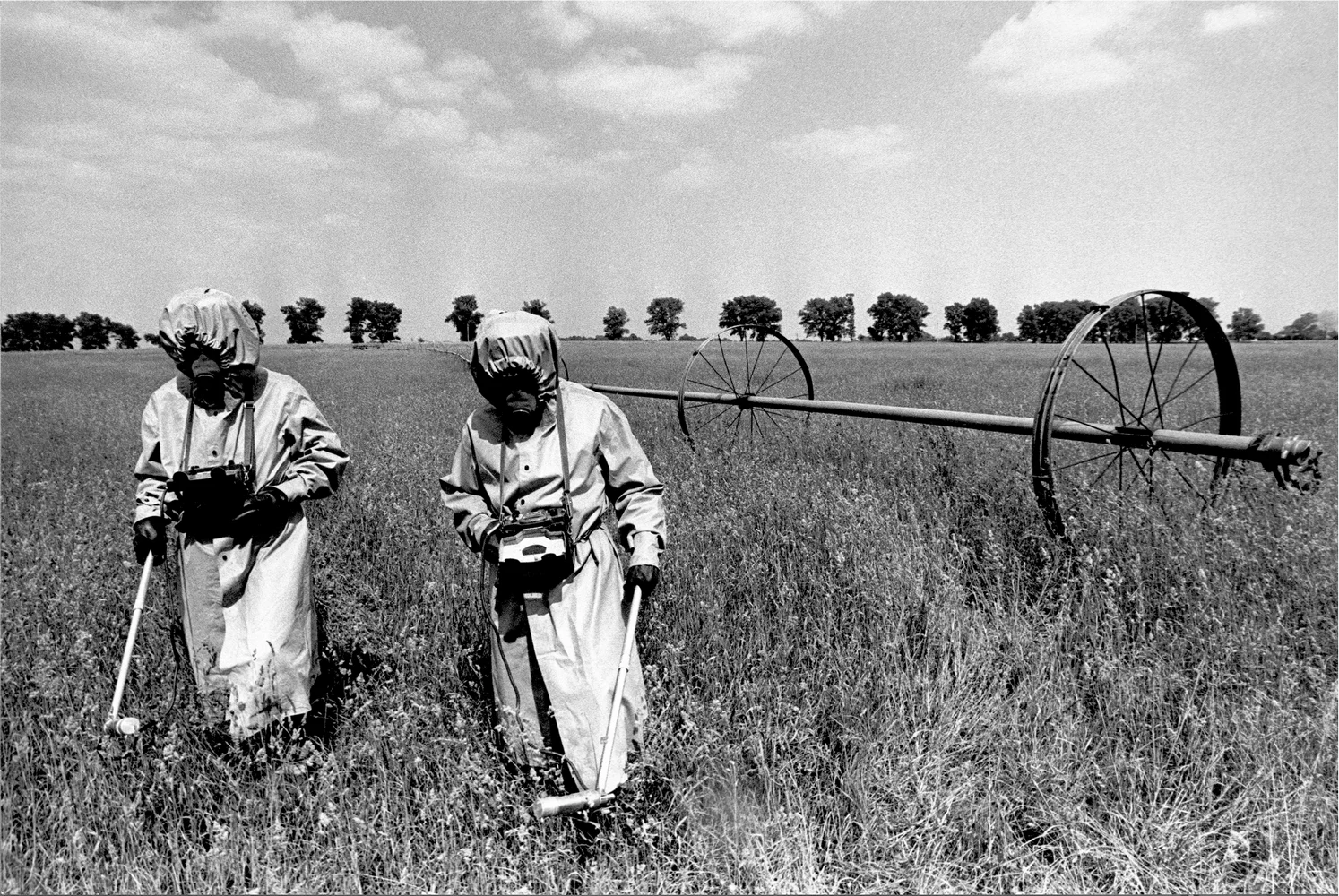
People in protective suits check how strongly the soil has been charged with radiation. Photo: Igor Kostin, source: sovietfoto.ru
April 29–30
Facade
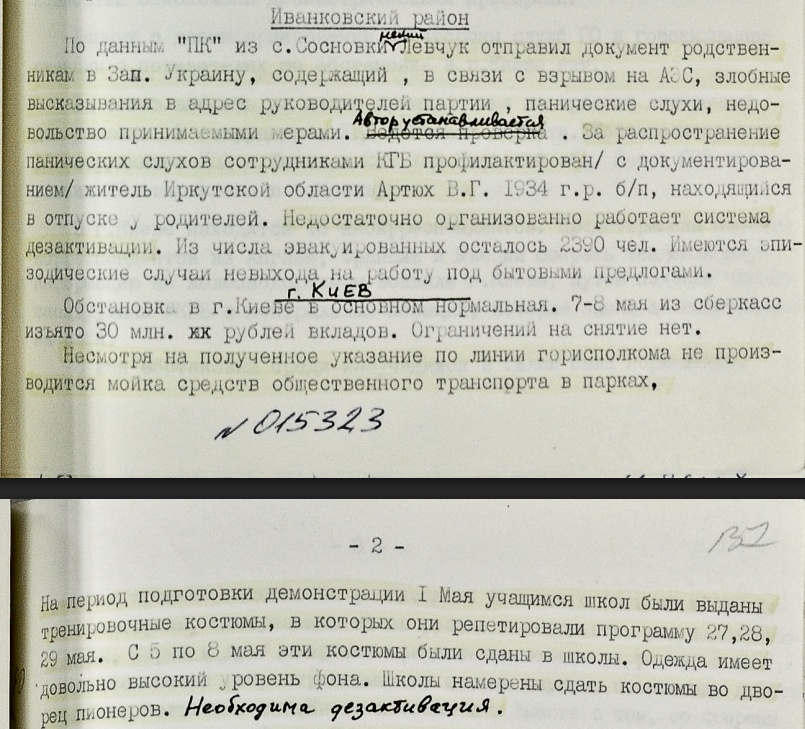
In cities across Ukraine and Belarus, rehearsals for May Day demonstrations are underway. In Kyiv, schoolchildren in athletic uniforms are marched along the parade route every day. When those uniforms are turned in, the KGB records: "The clothing has a fairly high [radiation] background level."
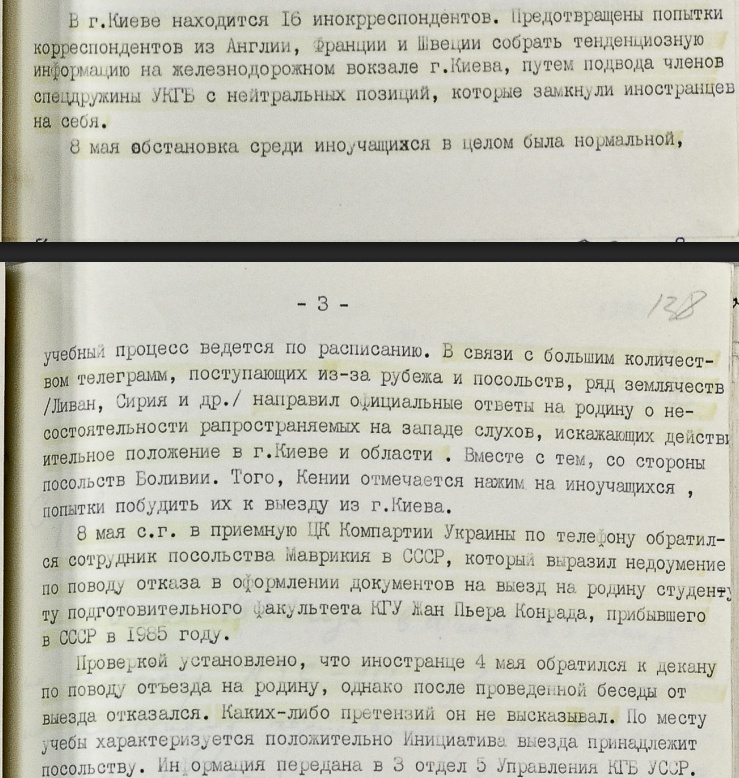
The media are silent again. The KGB takes charge of the information cover-up. Foreign correspondents in Kyiv, 16 of whom are in the city, are kept away from railway stations, are prevented from talking to people and gathering "tendentious" information, are surrounded by agents posing as ordinary citizens, and are fed the "correct" details.
Agents also persuade foreign students and tourists not to panic and not to leave Kyiv, so they will not carry information out or become living evidence of radioactive contamination.
Fragment of a KGB memo. Source: avr.org.uaMay Day holiday in Kyiv on Khreshchatyk, 1986. Photo source: obozrevatel.com
Reality
The reactor continues to burn. Radiation background in Kyiv is elevated by hundreds of times; according to meteorologists at 7 a.m. on May 1, it is 550–1,200 microroentgen per hour. The concentration of radioactive particles is especially high in low-lying areas, exactly where the holiday column will pass. The streets there are being actively washed.
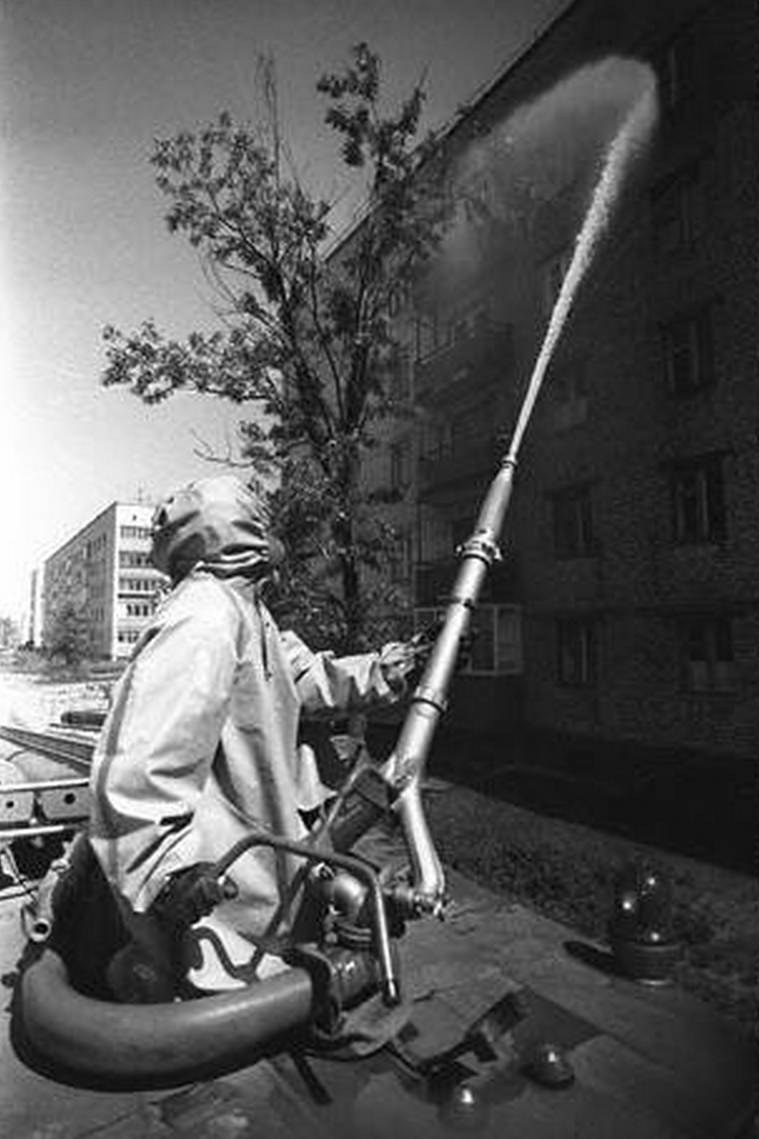
Washing buildings of radiation, probably in the most heavily contaminated zone. Photo: Igor Kostin
Just before the start of the demonstration in Kyiv, the car of the first secretary of the Communist Party of Ukraine, Vladimir Shcherbytsky, brakes sharply by the reviewing stand on Khreshchatyk. According to witnesses, he angrily tells officials about his conversation with Gorbachev: "I told him the demonstration cannot be held on Khreshchatyk; it is a ravine, radiation accumulates here. And he told me: you will put your party card on the table if you mess this up."
In the evening, journalists travel toward the Chernobyl NPP, but almost no new information appears in the media.
The New York Times, however, publishes a condemnatory column about how Soviet authorities are hiding the truth from citizens and driving them to parades under radiation.
May 1
Facade
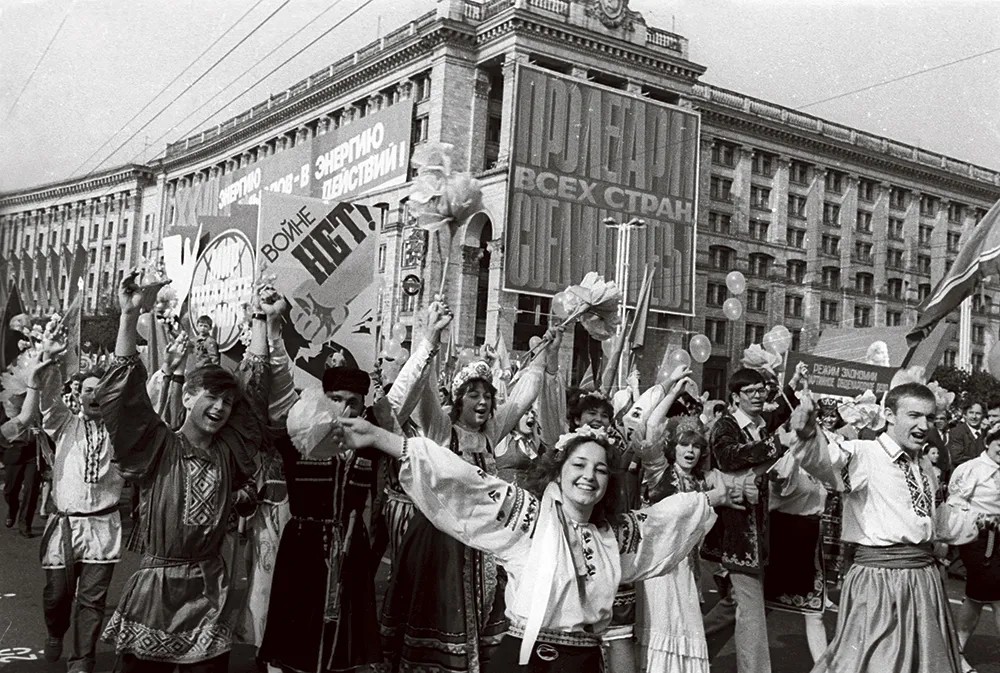
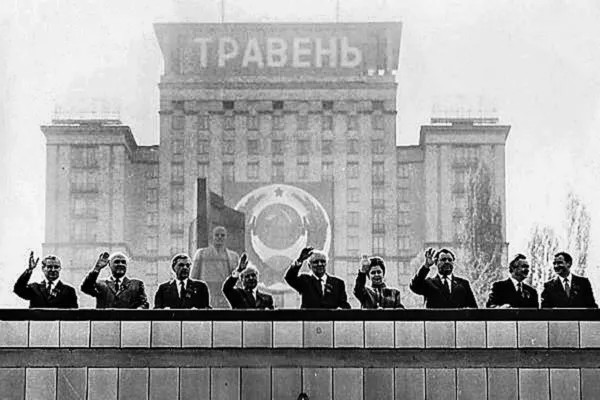
Shcherbytsky nevertheless attends the parade with his whole family, including his grandchildren, because that is what is required. He also demands the same from other officials: they must show people by personal example that there is no reason to worry. About 120,000 Kyiv residents take part in the parade. Instead of the usual five hours, the event lasts only an hour and twenty minutes.
Demonstration in Kyiv on May 1, 1986. Photo: obozrevatel.com
"The demonstrations were not cancelled because by May 1 there was still no full picture of what had happened," Gorbachev later insisted. "Indeed, we feared panic; you can imagine for yourself the possible consequences of mass panic in a city of many millions. Now it is clear that this was a mistake."
May Day demonstrations take place in Minsk and throughout Belarus as well, including in Gomel, Bragin, Khoiniki, and Narovlya.
"There are 600 students from the mechanical-technological faculty in the holiday column. They earned the right to take part in the May Day demonstration after winning competitions," the newspapers report. Almost no one suspects radiation.
The head of Gomel region, Alexei Kamai, later, after rising above Bragin in a helicopter and seeing clouds of smoke over the nuclear plant, about 40 km from the town, will remember how on May 1 his wife and daughter marched in the parade column in Gomel.
Demonstration in Kyiv on May 1, 1986. Officials greet parade participants. Photo: obozrevatel.com
In the newspaper Zvyazda, the first small report about Chernobyl in the Belarusian media appears: "Аварыя прывяла да разбурэння часткі канструкцый рэактара, яго пашкоджання і некаторай уцечкі радыеактыўных рэчываў. Загінулі два чалавекі. <…> Цяпер радыяцыйная абстаноўка на станцыі і прылеглай мясцовасці стабілізаваная. Жыхары пасёлка АЭС і трох бліжэйшых населеных пунктаў эвакуяваныя."
The Bragin newspaper Mayak Palessya writes about how potatoes and corn are being planted at the state farm in the village of Savichi: "The future harvest is being obtained today." Soon the village will fall into the resettlement zone.
That same day, the regional council of deputies rules that foreigners may leave Gomel region only after a medical examination or after signing a statement that they have no claims against Soviet authorities.
May Day demonstration in Minsk in 1986. Source: euroradio.fm
Reality
At Chernobyl, the struggle continues against a reactor that cannot be extinguished. Dumping a mixture of boron, lead, and sand first reduces the radiation release, but then the temperature in the "throat" beneath that blanket begins to rise, and the release of radioactive substances increases again.
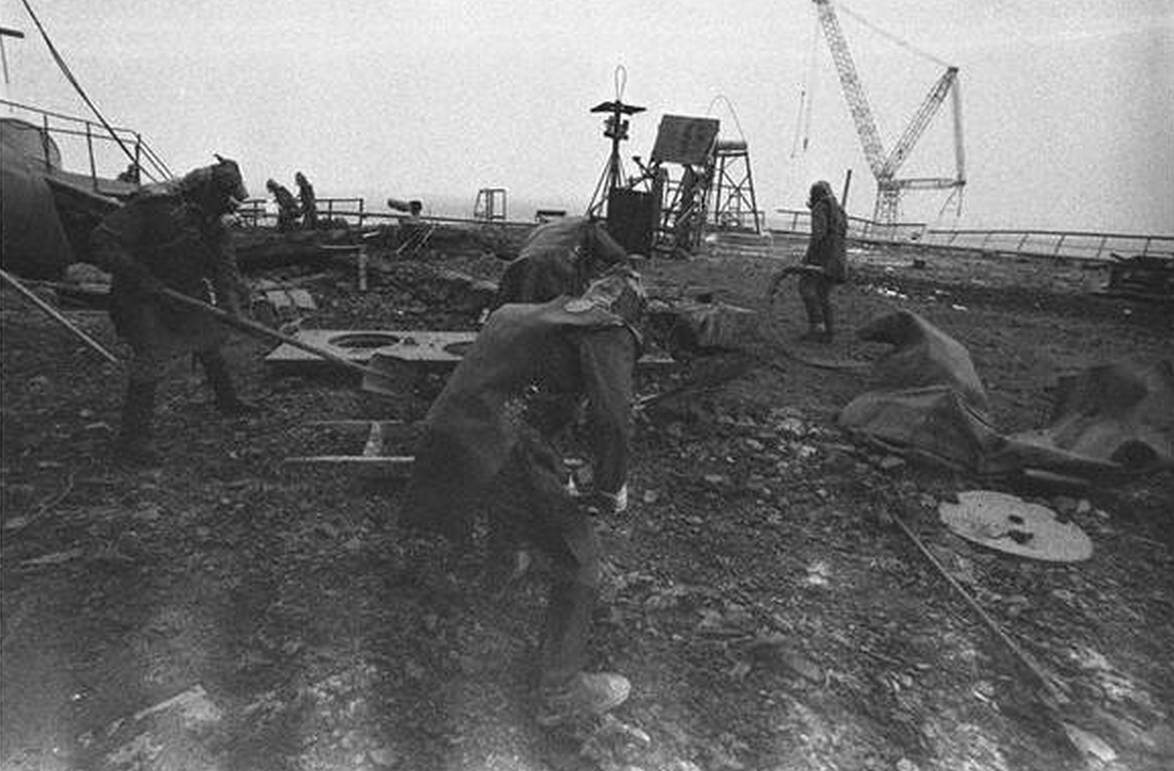
Robots are sent to clear radioactive debris from the roofs above the reactor, but their electronics fail under the radiation. Then soldiers with shovels go onto the reactor-building roofs: "biorobots". Each can spend only a few dozen seconds there.
Clearing radioactive materials from the roof of Chernobyl Unit 4. Photo: Igor Kostin, source: vk.com/fotobiblioteka_vk. Igor Kostin was a special correspondent for the Novosti Press Agency in Ukraine. He was the only photojournalist who reached Chernobyl with cleanup workers in the first days after the accident. His Chernobyl photo series won first prize in the Science and Technology category at World Press Photo in 1986.
At the same time, a concrete slab is poured beneath the reactor to prevent its lower tier from collapsing. Miners dig a 136-meter tunnel to prevent the nuclear melt from penetrating the soil under the plant.
Radioactive water, which had been poured into the flooded rooms of Unit 4 in the first hours after the accident, is pumped out. To prevent contamination from reaching groundwater and the Dnipro basin, a protective dam is built around Chernobyl in ten days. Along the Pripyat River, engineering troops pile up kilometers of earth embankments.
The release of radionuclides from the reactor is substantially reduced only by May 10.
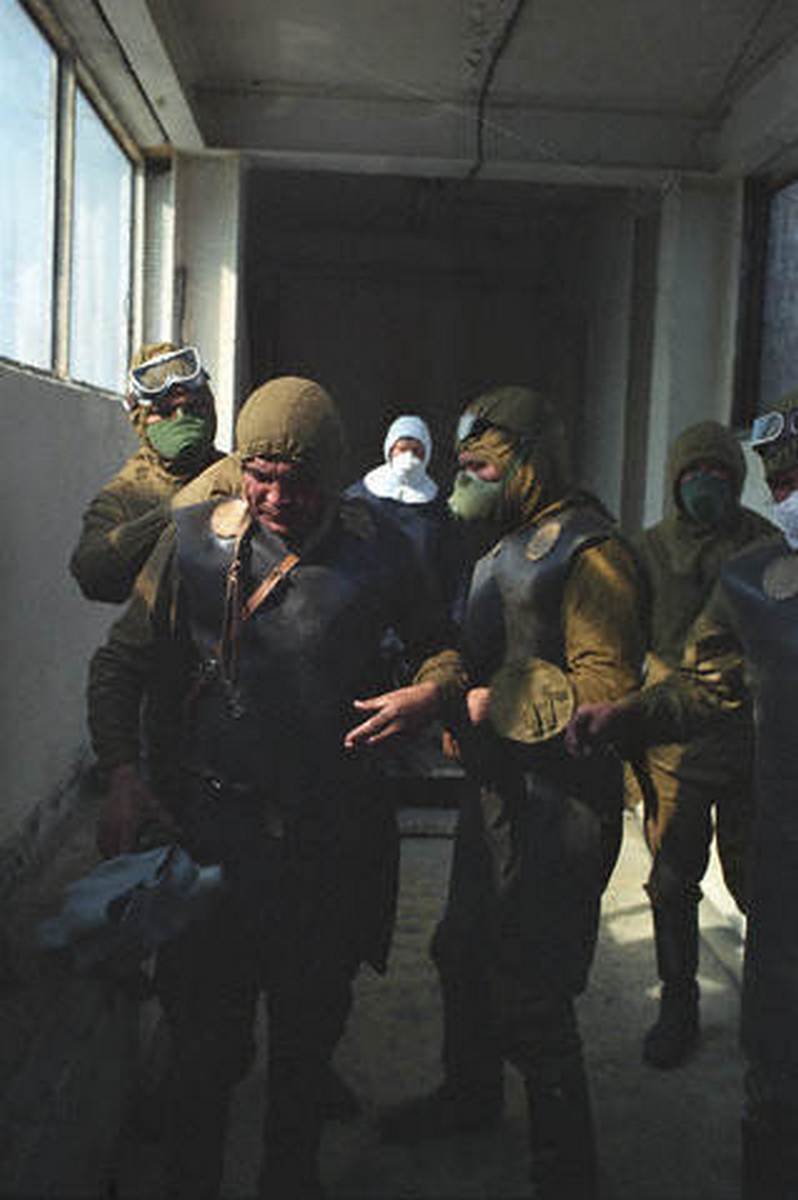
Liquidators dressed to go onto the roof of Unit 4, where radiation is strongest. Their protective clothing cannot fully protect them from it. Photo: Igor Kostin
In the first days of May, the entire population within a 30-km radius around the plant, 116,000 people, is evacuated.
People learn more and more about Chernobyl from rumors and Western radio broadcasts. On May 5, the International Herald Tribune publishes a detailed map of the spread of radioactive substances.
Panic grows in Kyiv. Everyone tries to take at least their children farther away from the city; train tickets are swept up completely. Road exits are controlled by traffic police.
People are right to flee. A secret KGB report dated May 10 gives the real level of contamination in the Ukrainian capital: "Radioactivity in the air at various points ranges from 500 to 1,050 microroentgen per hour; indoors, up to 100 microroentgen per hour." A background level up to 20 microroentgen per hour is considered safe.
Fragment of a KGB memo. Source: avr.org.ua
At Moscow Hospital No. 6, Chernobyl victims get worse. At first they had a latent period without obvious symptoms, but now radiation sickness enters its acute phase. At this point all the body's systems begin to fail because it can no longer produce new cells. Blood formation shuts down, ulcers appear on the skin, and mucous membranes disintegrate. Patients receive bone marrow transplants, but they help almost no one: the damage is too severe.
Relatives are almost not allowed into the hospital, but firefighter Vasily Ignatenko's wife, Lyudmila, obtains permission from doctors to be present. To do so, she has to hide that she is six months pregnant. Doctors tell her: "You are sitting next to a reactor." But she spends 17 days by her husband's bed and even sleeps there.
Wedding of Vasily and Lyudmila Ignatenko. Photo: TUT.BY
May 2–10
Facade
Soviet media report only that two workers died at Chernobyl and say nothing about the real scale of the accident or environmental contamination. Only on May 6 are Kyiv residents told for the first time that there is a radiation danger. Anatoly Romanenko, head of the Ukrainian SSR Health Ministry, appears on local television and advises people to go outside less often and not open windows.
On that same date, ten days after the explosion, the first report from the zone appears in Pravda, on the last page.
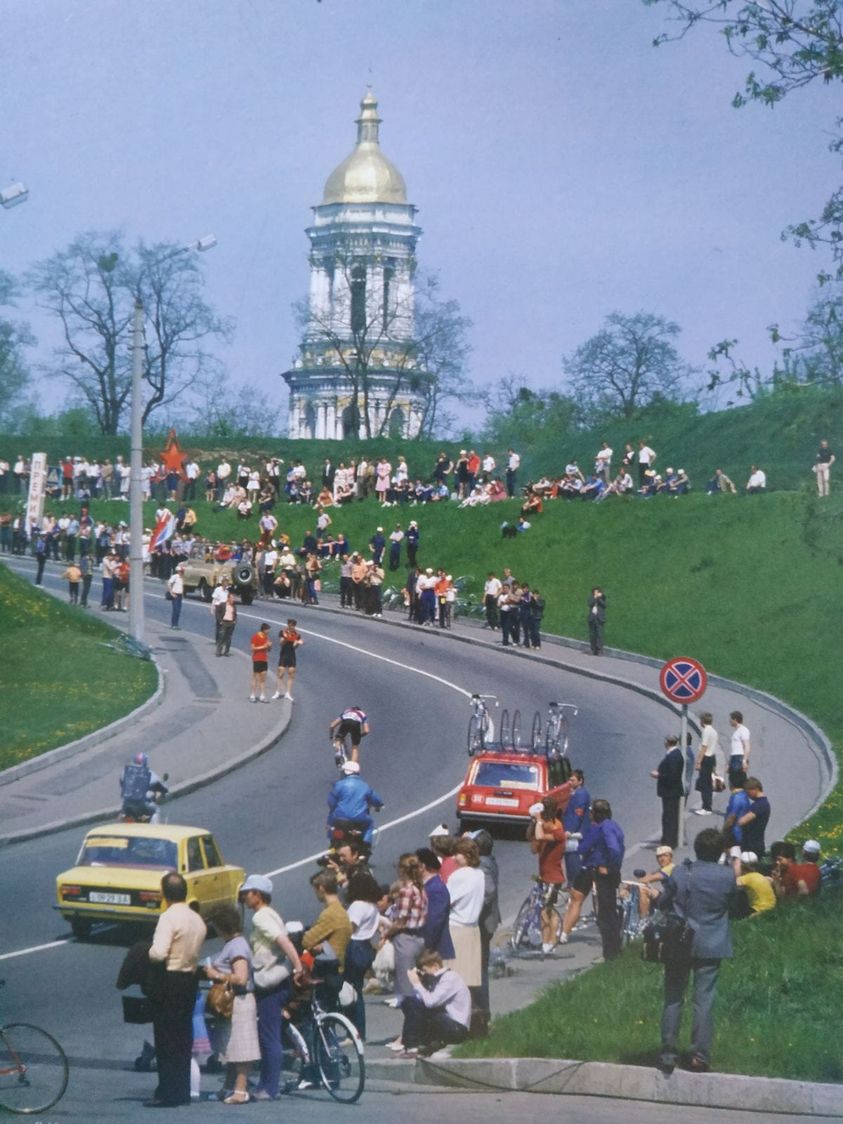
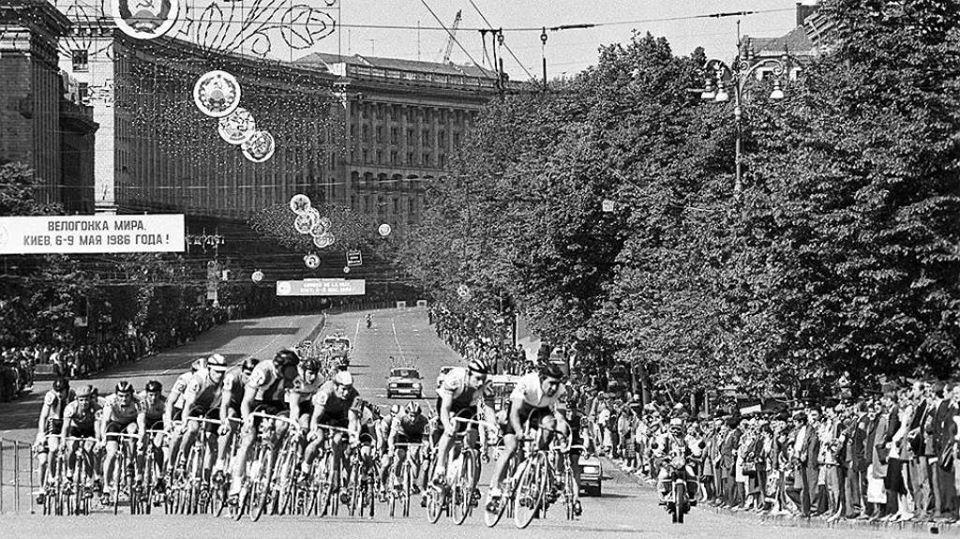
Peace Race in Kyiv, May 6–9, 1986. Photo: V. Falin, source: kyivpastfuture.com.ua
From May 6 to 9, the Peace Race takes place on Khreshchatyk. For the first time, these international competitions begin in the USSR. Thousands of Kyiv residents come out to greet the athletes. Radiation background in the city at that time exceeds the norm by 500 times.
On May 9, Belarusian and Ukrainian cities celebrate Victory Day.
That same day, at a press conference in Moscow, Soviet officials say that radiation at the border of the 30-kilometer zone around Chernobyl is 0.15 milliroentgen per hour. An internal secret KGB document dated May 10 records the real figures for Kyiv: 500–1,050 microroentgen per hour, or 3–6 times higher than the official data.
Peace Race in Kyiv, May 6–9, 1986. Photo: kyivpastfuture.com.ua
Reality
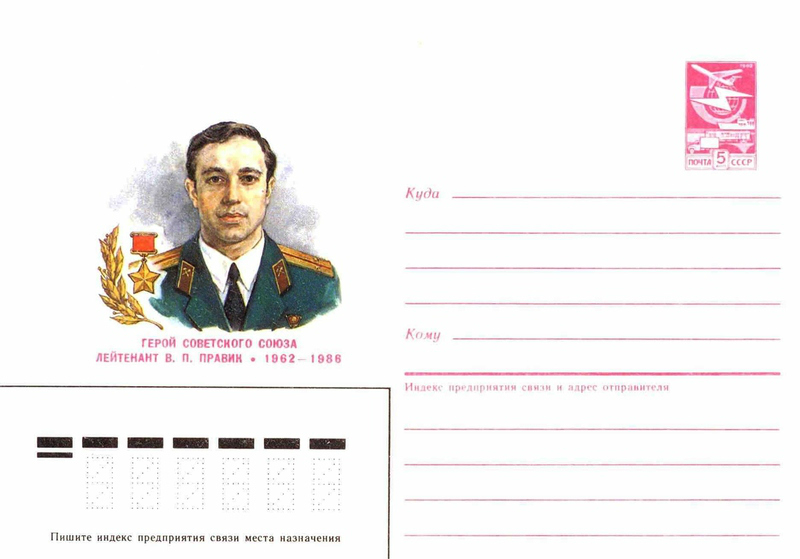
On May 11, Vladimir Pravik and Viktor Kibenok, the commanders of the fire crews who were first to climb onto the reactor roof, die. Pravik left behind a one-month-old daughter.
From the death certificate: "Pravik Vladimir Pavlovich, 23 years old. Chief of the watch of VPC-42, treated at the clinic of the Institute of Biophysics (Moscow) from April 27 to May 11, 1986. The patient suffered acute radiation sickness of an extremely severe degree: oropharyngeal syndrome, deep depression of hematopoiesis. Pneumonitis, radiation burn of the entire skin of the first degree and third-fourth degree burns to the skin of the face, eyes, and hands. Toxemia. Toxic-septic damage to parenchymal organs, pulmonary edema, cerebral edema. The illness arose and death occurred as a result of the patient's direct participation in the accident at the Chernobyl NPP. The certificate was issued to the patient's wife for presentation at her place of residence."
Soviet envelope depicting Vladimir Pravik. Photo: commons.wikimedia.org
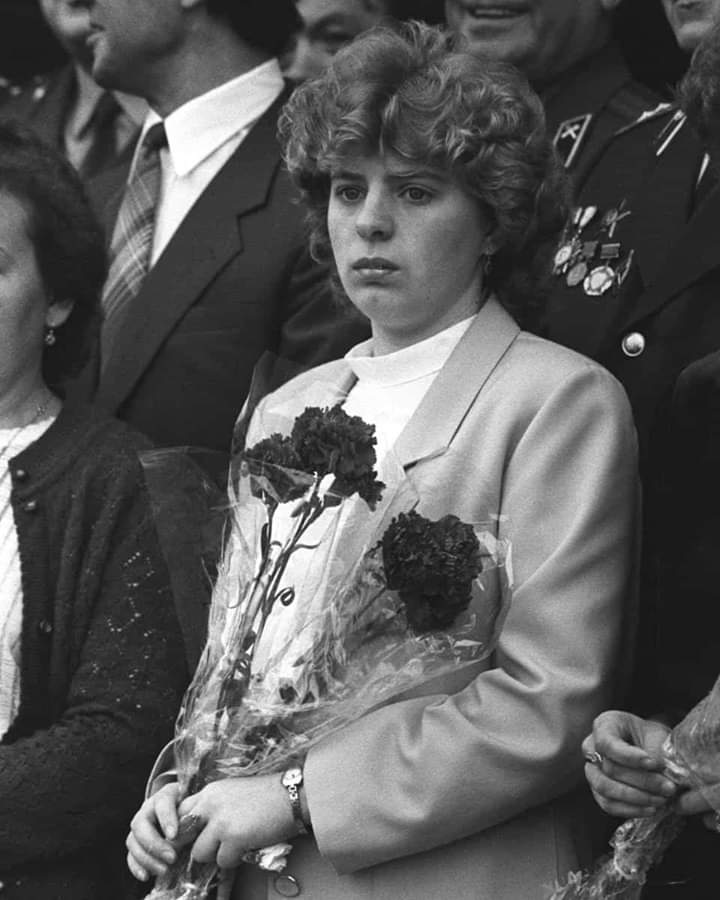
On May 13, Vasily Ignatenko dies. Two months later, Lyudmilagives birth in the same Moscow hospital. As the father wanted, she names the girl Natasha. The baby looks healthy, but she has cirrhosis of the liver and a heart defect. The girl lives only a few hours and is buried next to her father. Doctors then tell Lyudmila that the infant in her womb had taken the radiation strike upon herself and saved her life.
Lyudmila Ignatenko. Photo: Igor Kostin
May 11–13
Facade
Soviet media report nothing about the firefighters' deaths and continue to keep silent about the accident.
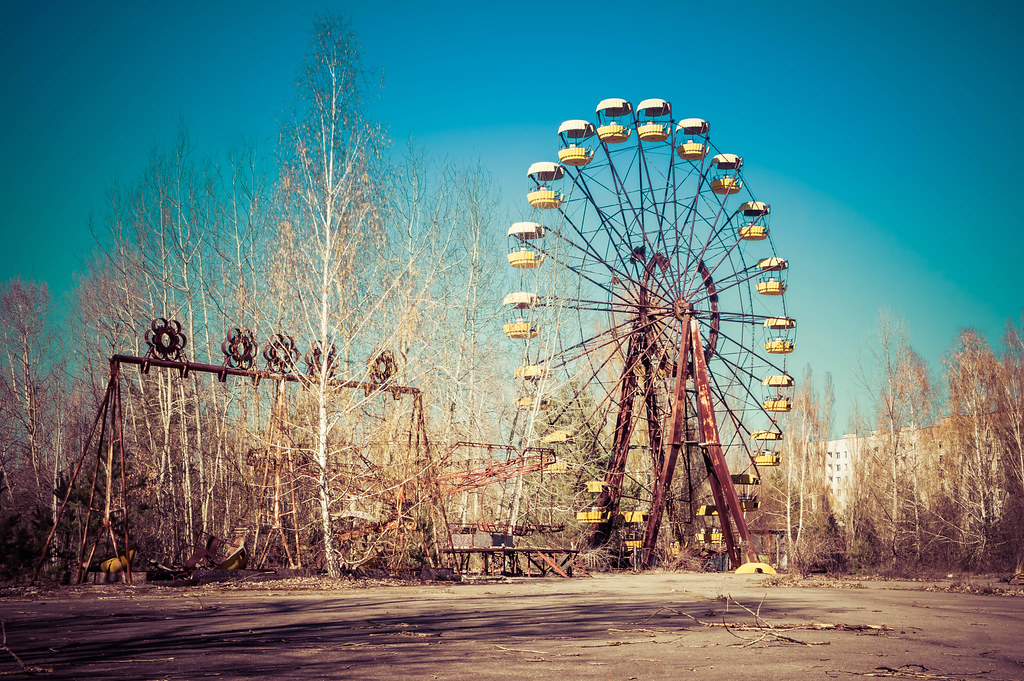
The Ferris wheel in Pripyat's amusement park, which never opened, April 2014. Photo: Rebecca Bryant / flickr.com
Reality
At the Moscow hospital, the fifth Chernobyl firefighter, Nikolai Vashchuk, dies. The sixth and last, Nikolai Tytenok, will die two days later.
Relatives are forbidden to take the firefighters' bodies. They are buried at Mitino Cemetery in Moscow in zinc coffins under concrete slabs because they are so radioactive.
From the 30-kilometer zone around Chernobyl, 116,000 people have been evacuated.
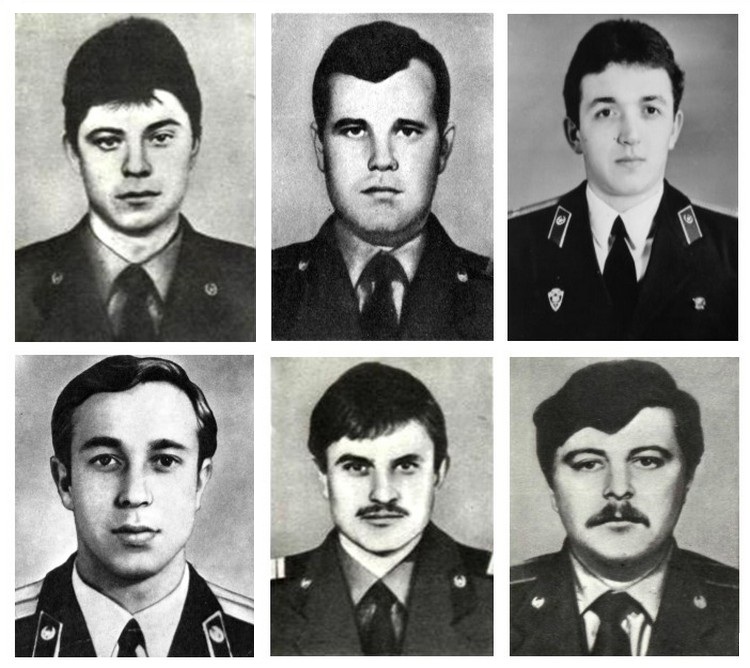
Chernobyl firefighter heroes: Nikolai Vashchuk, Vasily Ignatenko, Viktor Kibenok, Vladimir Pravik, Nikolai Tytenok, Vladimir Tishura. Photo: commons.wikimedia.org
May 14
Facade
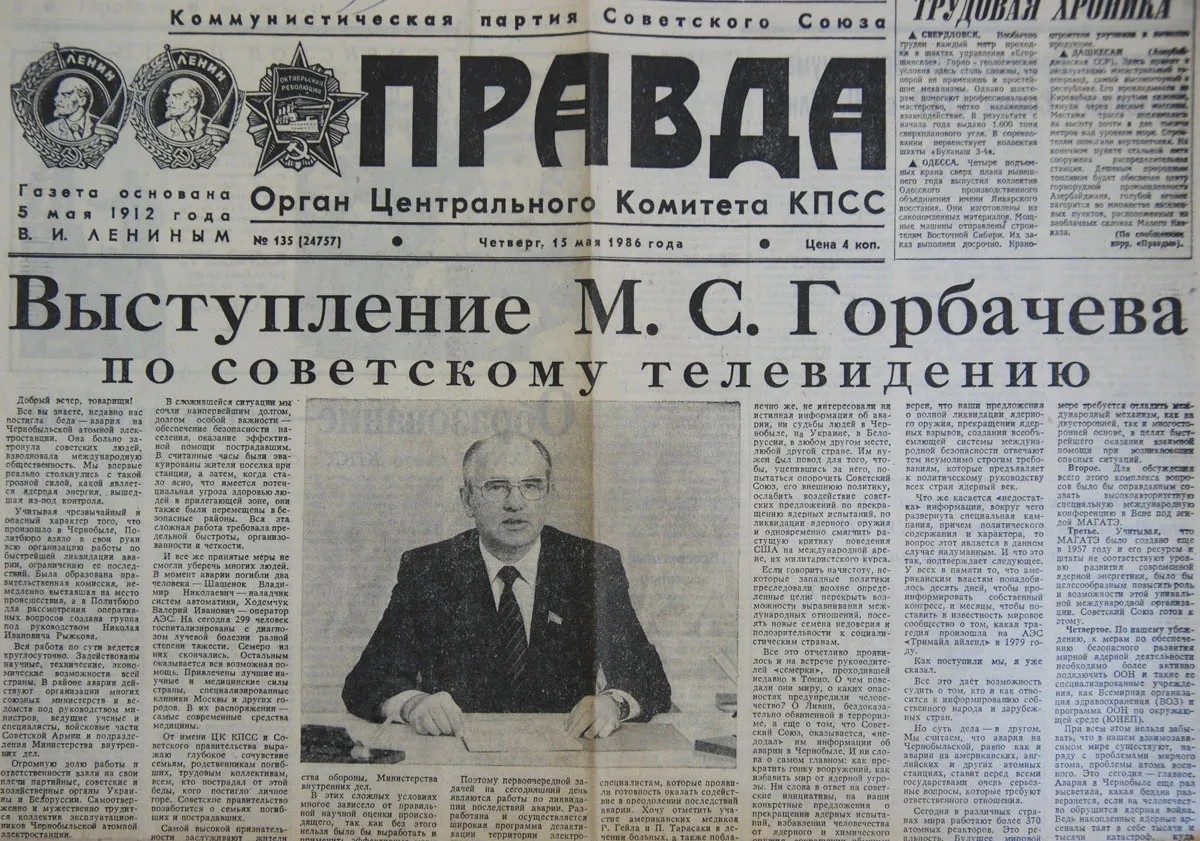
Eighteen days after the explosion, General Secretary Gorbachev addresses the country for the first time on television and in the press. He gives a more or less truthful account, though heavily softened, of what happened at Chernobyl. Cleanup is underway, residents have been evacuated, 299 people were hospitalized with acute radiation sickness, and seven of them have died, the general secretary says, expressing condolences.
Then he turns the speech into praise for the heroism of Soviet people selflessly fighting the nuclear accident and a condemnation of the "anti-Soviet campaign" in Western media.
Text of Mikhail Gorbachev's speech on May 14, 1986. Clipping from Pravda for May 15. Source: obozrevatel.com
"Thanks to the effective measures taken, today we can say: the worst is behind us. The most serious consequences have been prevented. Of course, it is too early to draw a line under what happened. We must not become complacent. There is still great and prolonged work ahead. The radiation level in the area of the plant and on the territory immediately adjacent to it still remains dangerous to human health," Gorbachev says, as though this danger had not spread hundreds of kilometers across several countries.
He calls Western press reports about the scale of the catastrophe an "immoral campaign" and a "malicious lie"; almost half the speech is devoted to this.
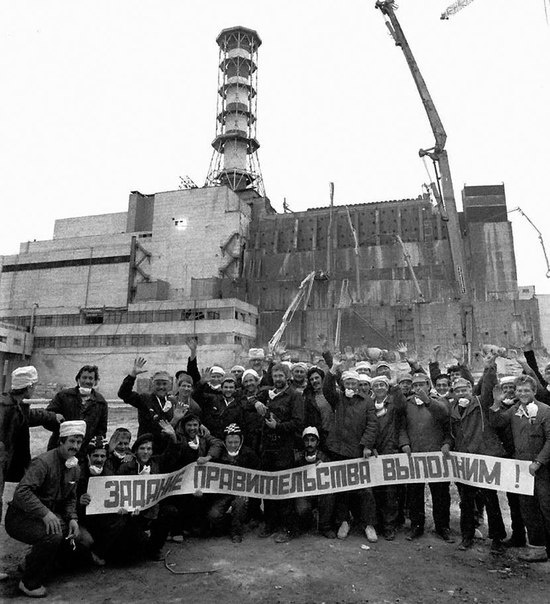
Cleanup of the Chernobyl accident. The banner reads: "We will fulfill the government's task!" Photo: 23.mchs.gov.ru
Was the Worst Really Behind Them?
134
people received an official diagnosis of acute radiation sickness. Twenty-eight died in the first months, and another 11 over the following 12 years
200,000
sq. km of territory were contaminated with radiation
8.4 mln
people were exposed to radiation. About 400,000 were resettled
500,000+
liquidators were involved in work at Chernobyl over the years. Among the most heavily exposed alone, the WHO estimated, about 4,000 were expected to die from cancer
18 bln
Soviet rubles the USSR spent in the first years on cleanup, about 85 billion dollars in today's prices. The new sarcophagus built over the destroyed reactor in the 2010s by the joint efforts of four dozen countries cost more than 2 billion euros.
300 years
will pass after the accident before the land is cleansed of cesium and strontium. Americium will remain for thousands of years, plutonium for tens of thousands
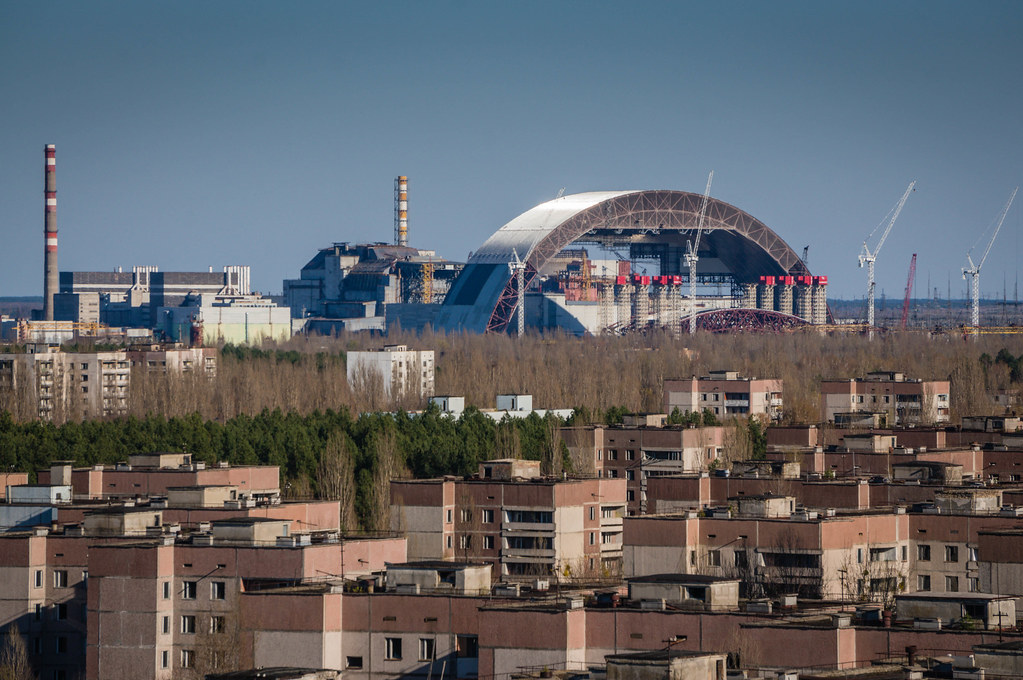
Pripyat, April 2014. Behind the empty buildings, the new sarcophagus for Chernobyl is under construction. Photo: Rebecca Bryant / flickr.com
Belarus
Belarus was the most affected country. After the accident, 66% of its territory had cesium-137 contamination above 10 kilobecquerels per m², and 23% above 37 kBq/m², compared with 5% for Ukraine and 0.6% for Russia. About a quarter of the country's forest fund was contaminated with radiation: half in Gomel region and more than a third in Mogilev region.
The contaminated zone included 3,678 settlements where 2.2 million people lived. 479 settlements in the exclusion zone ceased to exist.
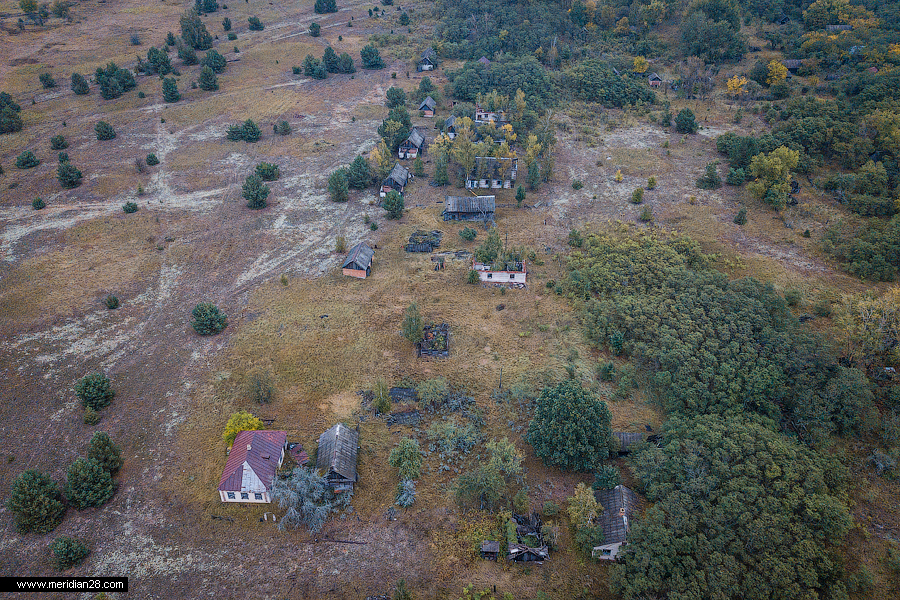
Resettled village of Orevichi in the Khoiniki district. Photo: meridian28.com
Children turned out to be the most heavily exposed residents of Belarus. According to 1986 measurements, about 30% of children under two received doses above 1 gray. After the accident, thyroid-cancer incidence in Belarus among children increased 33.6 times, and among adults 2.5–7 times.
Belarus's total damage over 30 years after the accident is estimated at 235 billion dollars, equal to 32 state budgets at the 1985 level.
Today, about 930,000 people still live in radioactive contamination zones in Belarus. Of them, 180,000 are children.